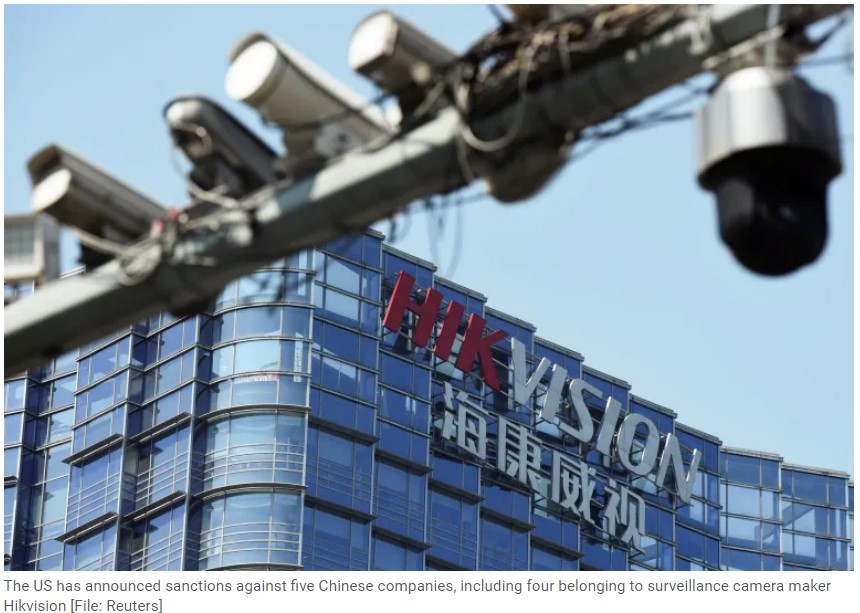
Four of the companies – Luopu Haishi Dingxin Electronic Technology Co, Moyu Haishi Electronic Technology Co, Pishan Haishi Yong’an Electronic Technology Co and Urumqi Haishi Xin’an Electronic Technology Co – belong to the Chinese surveillance camera manufacturer Hikvision, according to Hangzhou-based firm’s 2021 half-year report.
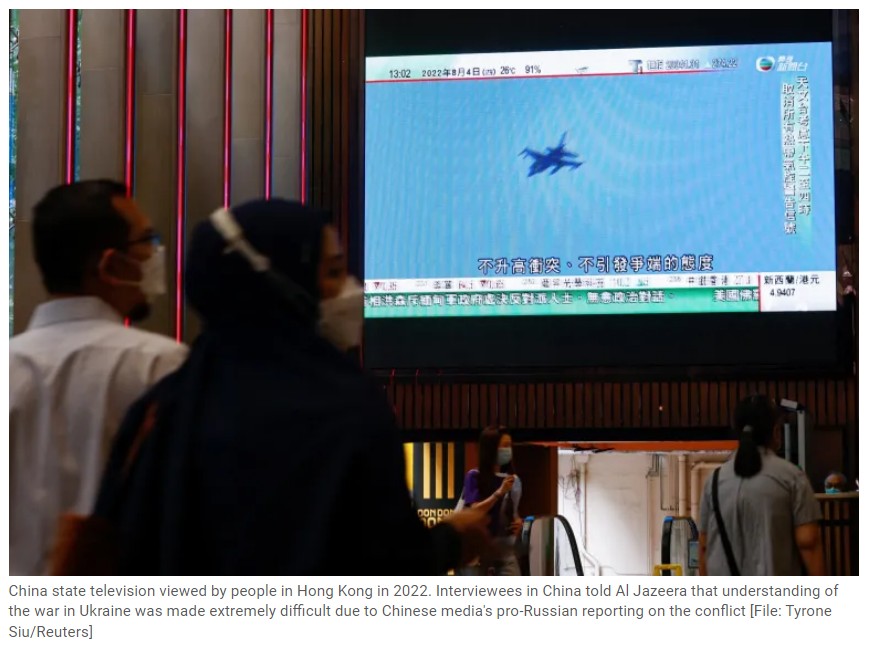
“I think the majority of Chinese people don’t notice it because they either don’t pay attention to the war or they only get their news about it from Chinese media,” she told Al Jazeera.
“But if you are able to look beyond the firewall [a term used to describe China’s draconian censoring of the internet], you see that the war is talked about very differently and reported on very differently in international and Western media,” she told Al Jazeera.
Early on in the invasion, China’s state broadcaster CCTV ran claims that the United States had funded the development of biological weapons in Ukrainian labs. It was also reported that Ukrainian President Volodymyr Zelenskyy had fled Kyiv in the wake of the first wave of Russian attacks.
Chinese media then dutifully relayed the Russian assertions that reports of torture and killings of Ukrainian civilians in the town of Bucha, near Kyiv, were ”fake news”.
All the while, the invasion was, and still is, being referred to as a “special military operation”, just as in Russian media.
Despite the censorship and the information bubble, however, both Lin and Tang have noticed a change in the way the Russian invasion is being addressed on Chinese social media.
Lin saw some anti-war remarks on Chinese social media when the war first broke out but the vast majority of posts she read were pro-Russia and anti-Western.
“Now, I think that there is a lot more posts and comments that are critical of Russia compared to before, and they also stay up longer before they are removed by censors,” Lin said.
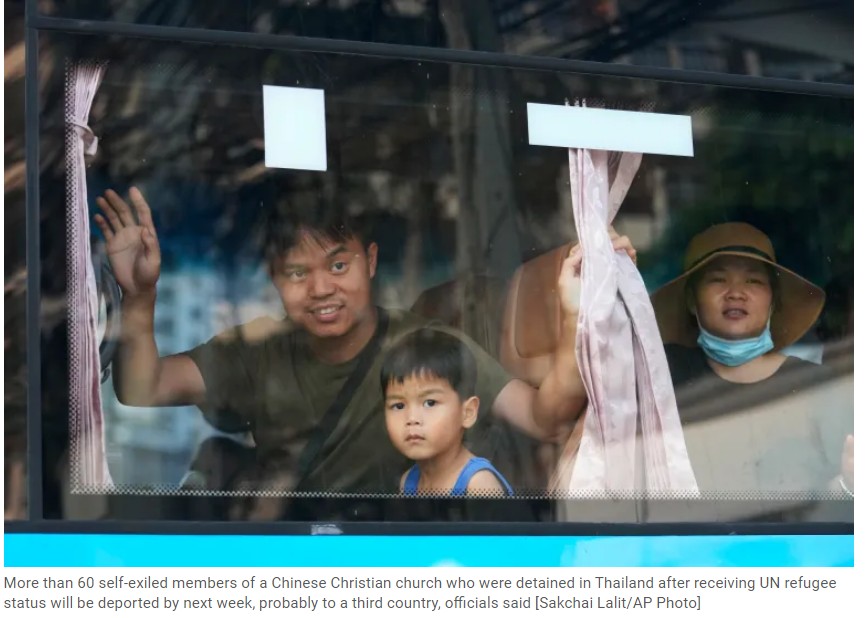
In its annual report last year, the United States Commission on International Religious Freedom said the Chinese Communist Party requires religious groups to support its rule and political objectives, including by altering their religious teachings to conform with the party’s ideology and policy. “Both registered and unregistered religious groups and individuals who run afoul of the CCP face harassment, detention, arrest, imprisonment, and other abuses,” the commission said.
Members of the Shenzhen Holy Reformed Church, also known as the Mayflower Church, leave from the Nongprue police station on their way to Pattaya Provincial Court in Pattaya, Thailand, Friday, March 31, 2023 [Sakchai Lalit/AP Photo]
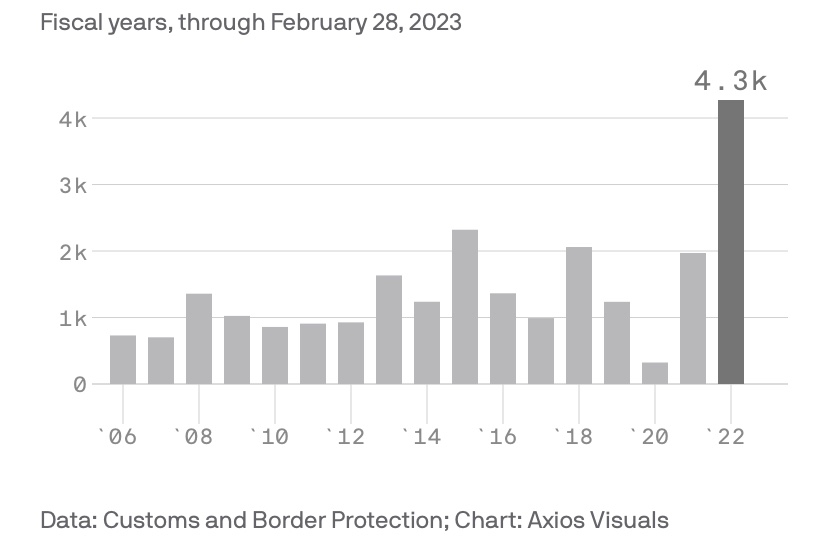
Thousands of Chinese migrants and asylum seekers have arrived at the U.S.-Mexico border in recent months, and many more are heading north after passing through the treacherous Darién Gap jungle between Colombia and Panama.
The announcement, for which the distributor gave no reason, added to censorship concerns amid a government crackdown in the Chinese territory. 发行方没有说明理由的这一宣布,加剧了中国政府在中国领土上镇压的审查担忧。
HONG KONG — Public screenings of the British horror film “Winnie the Pooh: Blood and Honey” have been abruptly called off in Hong Kong, adding to worries about growing censorship in the Chinese territory….
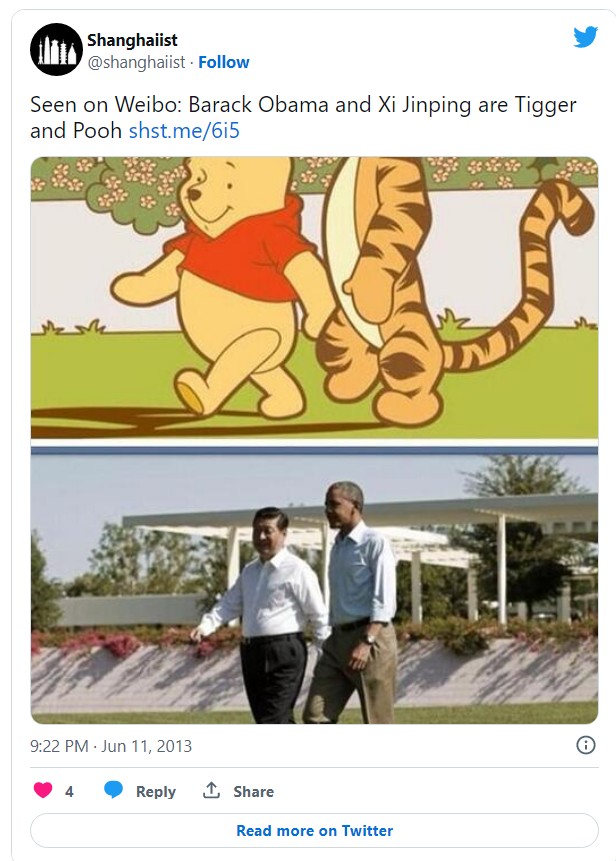
Winnie the Pooh has been a sensitive topic in China since 2013, when a photo of Chinese President Xi Jinping and President Barack Obama strolling together in California inspired Chinese internet users to compare them to the bumbling bear and his irrepressible friend Tigger. The Pooh character has become a lighthearted, parodic way to refer to Xi, who recently secured an unprecedented third term in office, as well as a way to express dissent…….
The city of more than 7 million, which lifted its last major “zero-Covid” restrictions only this month, is trying to revive its economy and its reputation as an international financial hub with the full-scale return of cultural and sporting events such as the Asia edition of Art Basel, which starts Thursday….
captured from twitter, https://www.nbcnews.com/news/world/hong-kong-winnie-the-pooh-blood-and-honey-rcna76046
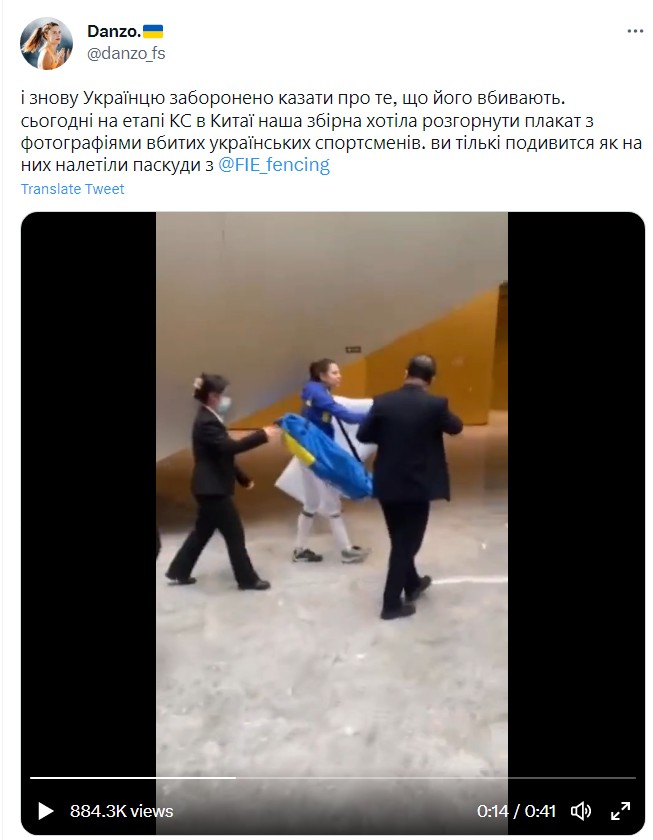
Ukrainian fencing national team tried to take pictures with banner printed with photos of Ukrainian athletes killed by the Russians at the Fencing World Cup in communist China, the communist chinese immediately swarmed up to stop them.
і знову Українцю заборонено казати про те, що його вбивають. сьогодні на етапі КС в Китаї наша збірна хотіла розгорнути плакат з фотографіями вбитих українських спортсменів. ви тількі подивится як на них налетіли паскуди з @FIE_fencingpic.twitter.com/khkeOOmqu4
尽管各国领导人对私营部门表示”坚定不移的支持”,但该国最著名的企业家之一还是选择在海外呆上几个月 Even as leaders voiced “unwavering support” for the private sector, one of the country’s best-known entrepreneurs chose to spend months overseas.
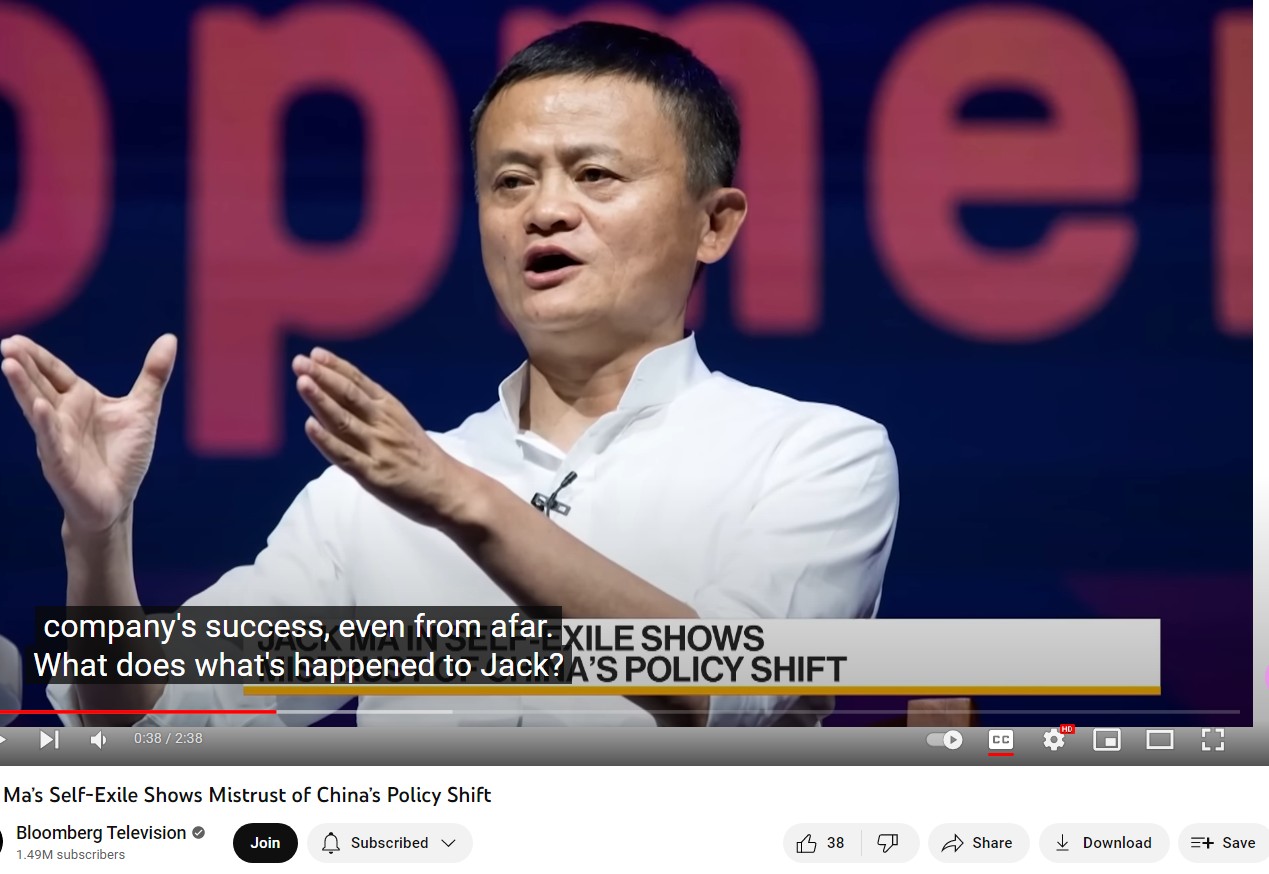
Alibaba Group Holding Ltd. and Ant Group Co. Ltd. co-founder Jack Ma may be one of Beijing’s best chances at repairing its reputation with the private sector in China and beyond. But so far, the billionaire isn’t jumping on invitations from authorities. Lulu Chen reports on Bloomberg Television.
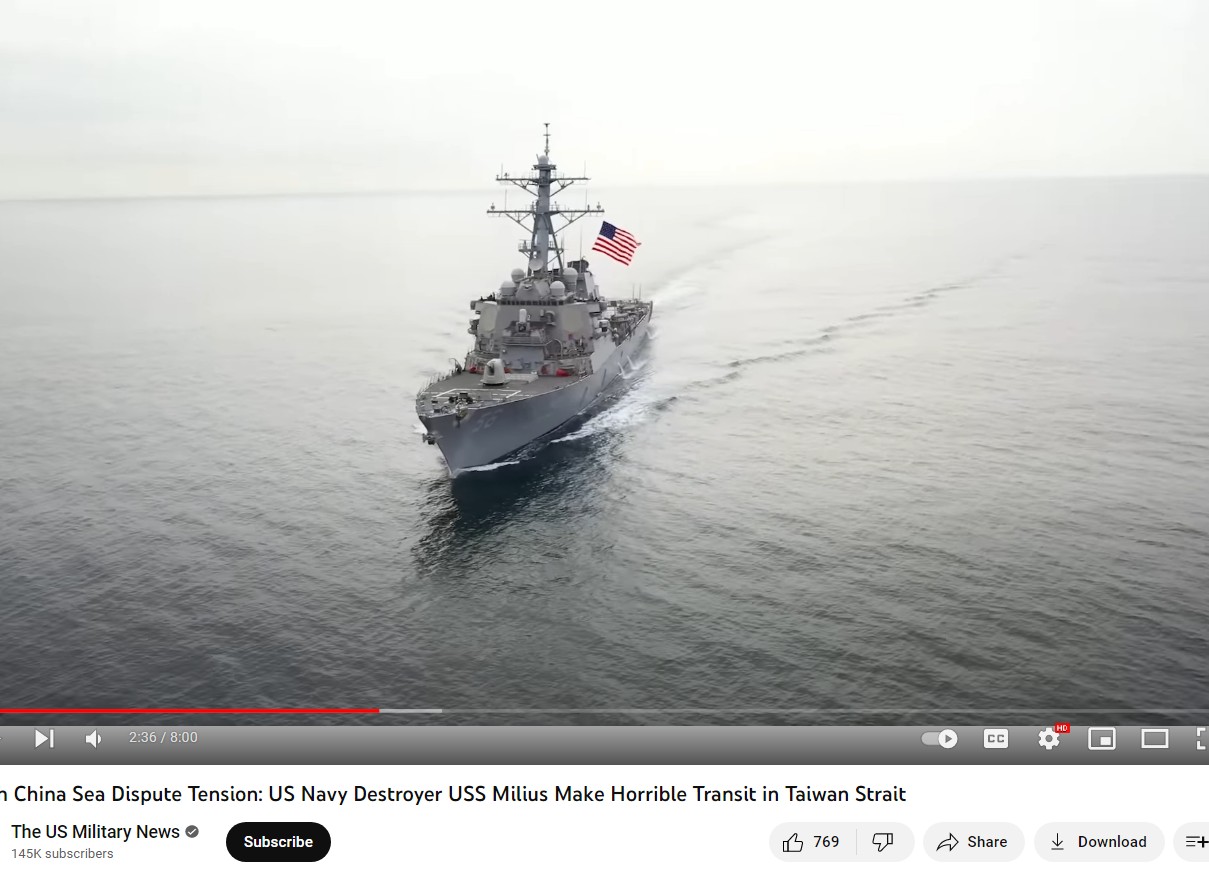
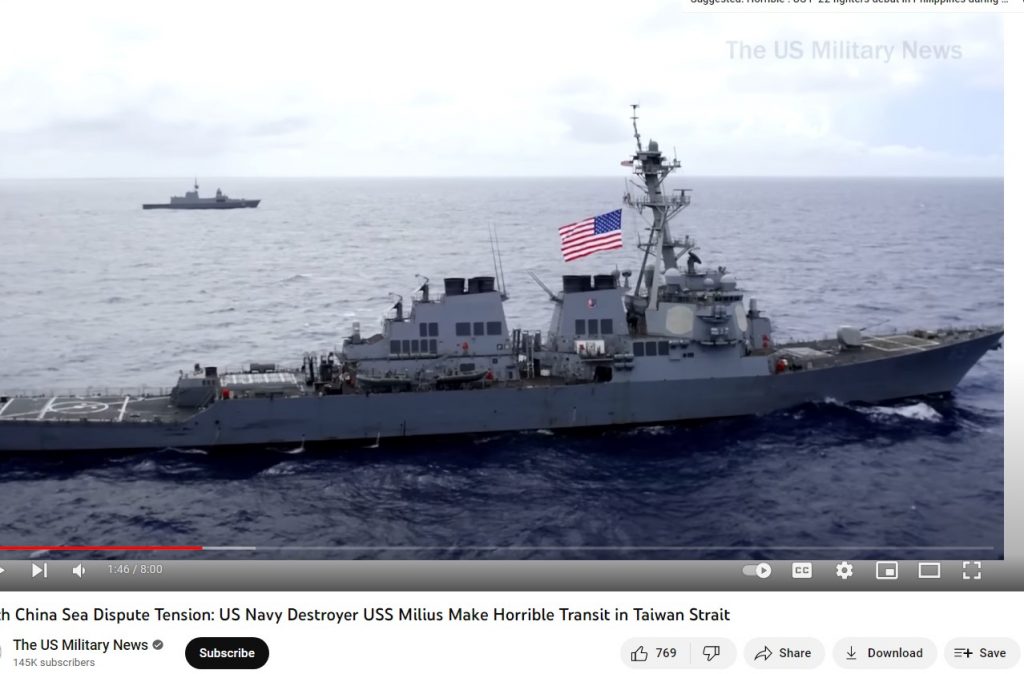
China Protests U.S. South China Sea Freedom of Navigation Operation A United States warship conducted a freedom of navigation operation in the South China Sea, near the Parcel Islands, the day after China claimed it chased away the ship from its territorial waters, the US 7th Fleet announced. USS Milius (DDG-69) sailed near the Parcel Islands and then into the South China Sea, according to the release.
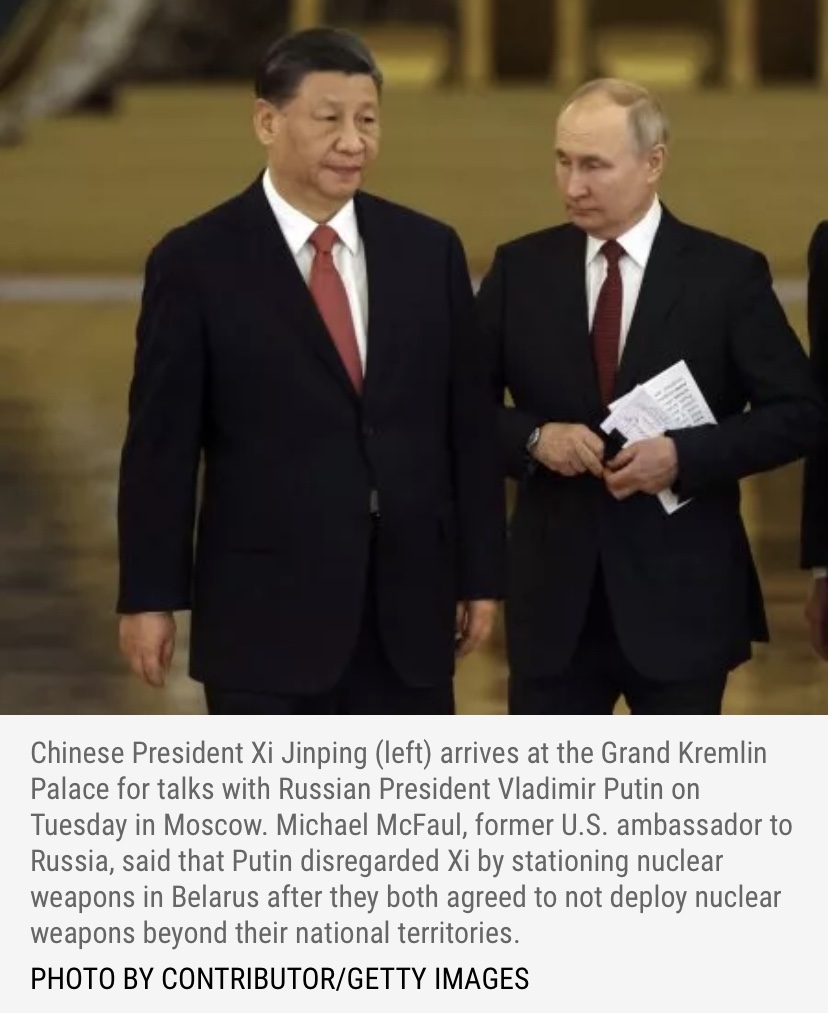
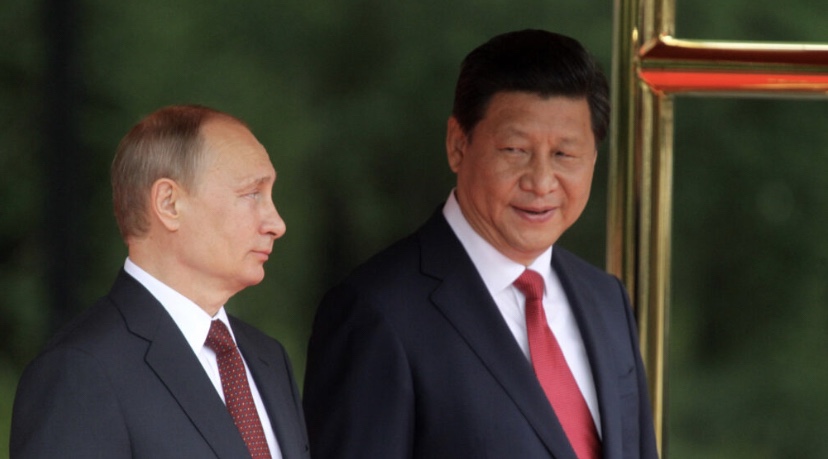
“Both Putin and [Belarusian President Alexander] Lukashenko humiliated Xi . Remember, Luka was just treated to a fancy state visit to China. Xi just came to Moscow. Can’t imagine this decision is going down well in Beijing,”
21 Маrch Russia & China state: “All nuclear powers must not deploy their nuclear weapons beyond their national territories & must withdraw all nuclear weapons deployed abroad.”
25 March Putin states: Russia planning to station tactical nuclear weapons in Belarus.
China is known for its stringent censorship regime, with popular apps like Douyin falling in line. The search term ‘Tiananmen 1989’ on Douyin did not yield any search result, CNN reported. But the same term searched on TikTok will lead to videos of users talking about the People’s Liberation Army’s brutal crackdown on pro-democracy protesters in Beijing that year.
— Read on www.hindustantimes.com/technology/why-is-chinese-app-tiktok-inaccessible-in-china-101679819210659.html
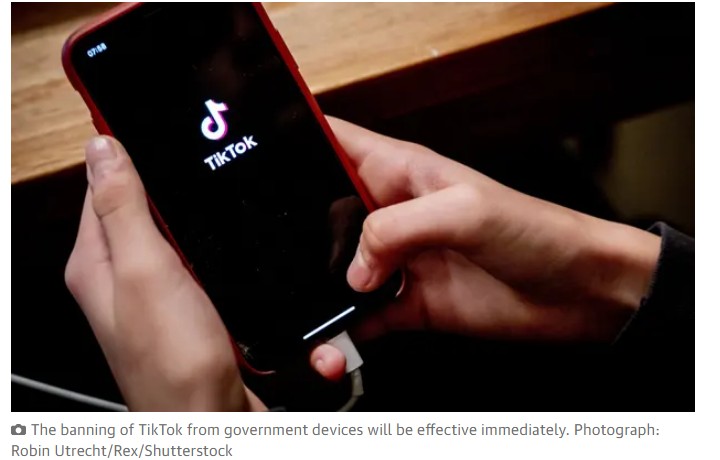
Chinese short video app TikTok is facing a tough time globally. While it has been banned by countries like United Kingdom, Canada, France, Belgium, India and others, it is fighting to prevent itself to be banned by the United States. The Senate has already voted to ban TikTok from all government devices.
China is known for its stringent censorship regime, with popular apps like Douyin falling in line. The search term ‘Tiananmen 1989’ on Douyin did not yield any search result, CNN reported. But the same term searched on TikTok will lead to videos of users talking about the People’s Liberation Army’s brutal crackdown on pro-democracy protesters in Beijing that year.
A Philippine official says Filipino diplomats have confronted Chinese officials in closed-door talks with a slew of protests over China’s aggressive behavior in the South China Sea but no major resolution was reached on the issues. A Philippine official involved in the talks told The Associated Press that Filipino diplomats outlined several incidents underscoring China’s assertiveness in the disputed waters in the closed-door talks. They cited Chinese “incursions” and a Feb. 6 incident when a Chinese coast guard ship aimed a military-grade laser that briefly blinded some crew members of a Philippine patrol vessel off a disputed shoal, the official said.
China’s representatives responded mostly by reiterating Beijing’s claim of sovereignty in most of the South China Sea and citing intrusions by Philippine vessels, the official said.
Opinion :
China, without shame, 不知羞耻的中国
中国主张, 不只是冠状病毒属于自己, 全世界都是自己, China claims coronavirus isn’t just theirs, the whole world is theirs
This is a golden opportunity to seize for India, Vietnam, and the many other countries that are now offering themselves as alternatives. Not that Vietnam is any less communist or more respectful of freedom than Beijing, but it keeps a good distance from China and enjoys good relations with Washington.
As in the days of the first Cold War, the one with the USSR, the West is less careful with our allies than with our adversaries. Vietnamese communism, or the worrying Hindu nationalism of Narendra Modi in India, do not stand in the way of doing business with the blessing of Washington. It is cynical but hardly surprising.
Although Xi Jinping finally ended China’s disastrous zero-COVID policy late last year, he has continued to double down on his Leninist project of deepening autocracy at home and aggression abroad. More Sino-Western “decoupling” and the emergence of Cold War-style blocs is all but assured.
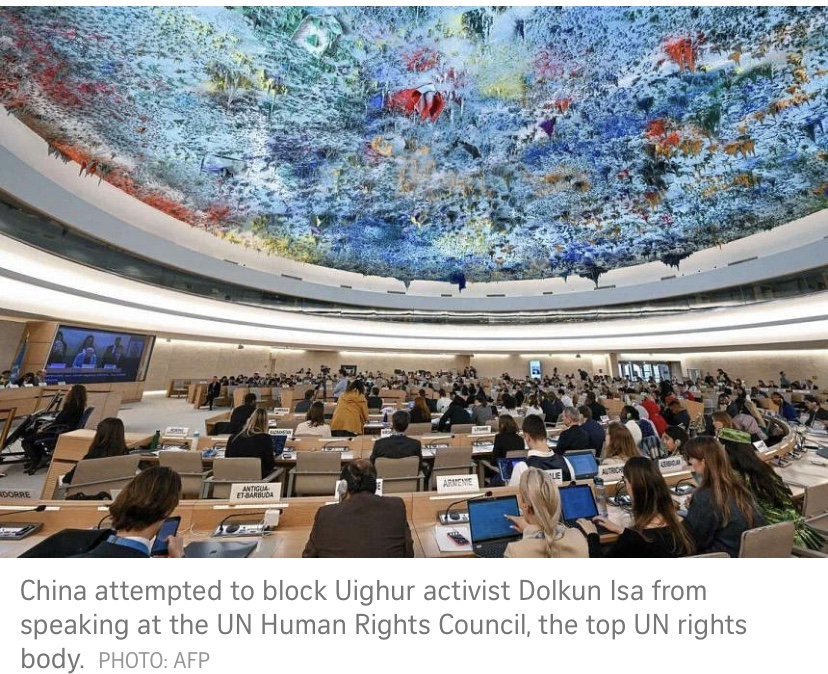
中国周四试图阻止一名著名的维吾尔族活动家在联合国人权理事会发表讲话,他要求该机构紧急处理关于北京严重违规行为的指控。 China attempted on Thursday to block a prominent Uighur activist from speaking at the United Nations Human Rights Council, where he demanded the body urgently address allegations of serious violations by Beijing.
China’s formidable Great Firewall, which blocks access to all sorts of Web services and perceived threats to the country’s people, was the victim of a glitch on Wednesday that saw hundreds of millions of Chinese Web users attempting to access allowed sites being redirected to the home page of Dynamic Internet Technology (DIT), a company that sells technology allowing Chinese citizens to get around the firewall.
Although state-run media outlets have said that the glitch was a successful hack, people apparently familiar with the matter told Reuters on Wednesday that no hacking attempts were identified, making those sources wonder whether simple human error caused the issue when modifications were made to the firewall.
The hole gave many Chinese citizens their first glimpse into the outside digital world. For years, China has been blocking Web sites, including DIT’s, for a myriad reasons, including alleged threats to its government structure and a desire to limit comments on certain topics.
Chinese say it’s very natural government forced to have how many babies on every people. Chinese think the world is the same. By China’s Brainwahed education.
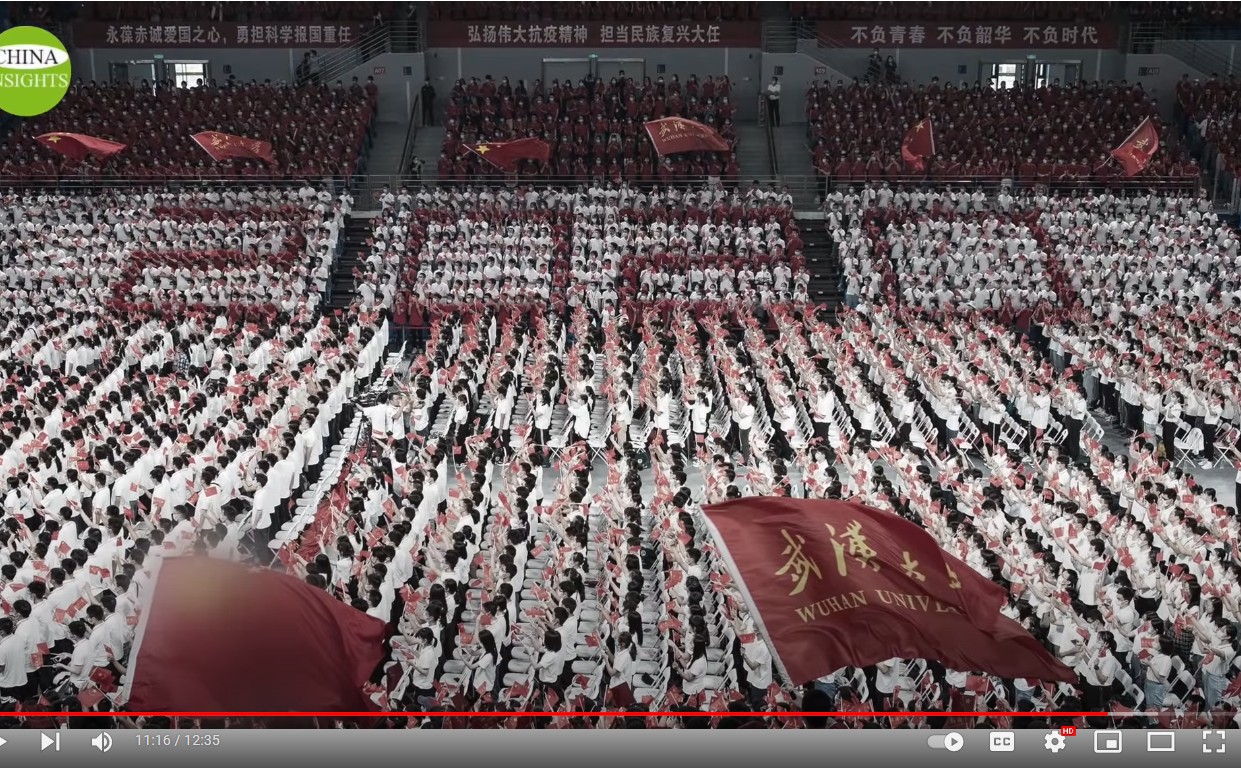
中国的爱国主义教育是长期的,不间断的。 中国共产党控制着社会的方方面面,包括经济、文化和媒体。 从幼儿园到大学的教育是中共的首要任务。中国共产党的洗脑教育造就了适应不了世界的中国人 China’s patriotic and war-wolf education is long-term with no interruptions. The Chinese Communist Party or CCP controls every aspect of society including the economy, culture, and media. Education from kindergarten to university is the CCP’s top priority.
This report explores how the Chinese party-state’s globally focused propaganda and disinformation capabilities are evolving and increasing in sophistication. Concerningly, this emerging approach by the Chinese party-state to influence international discourse on China, including obfuscating its record of human rights violations, is largely flying under the radar of US social media platforms and western policymakers.
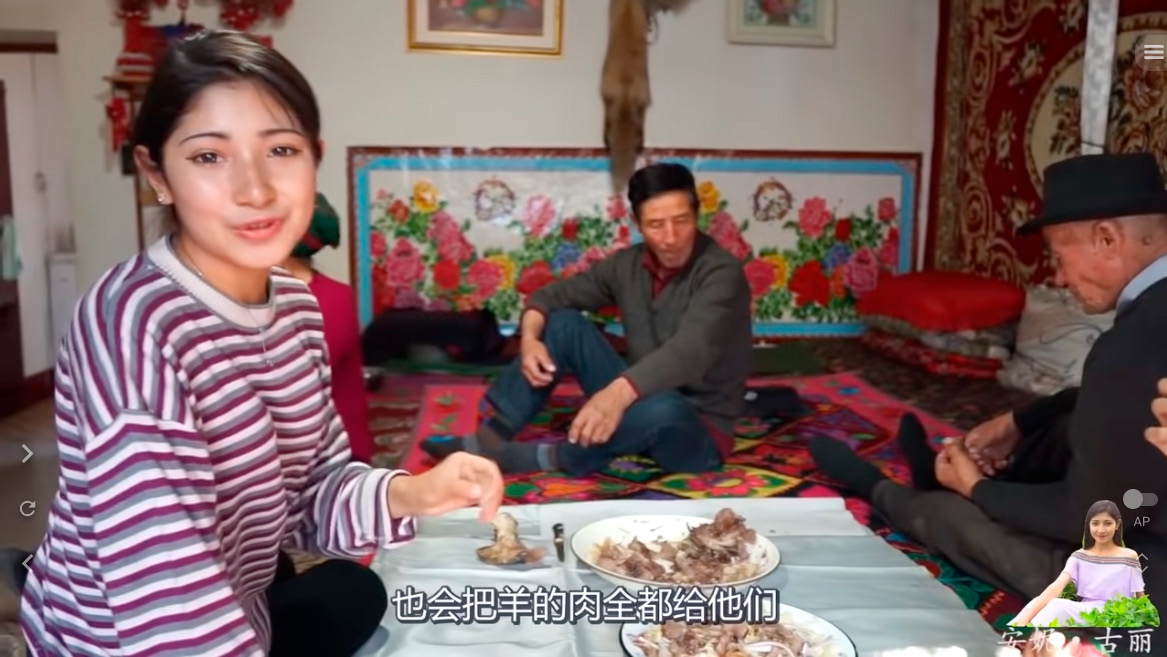
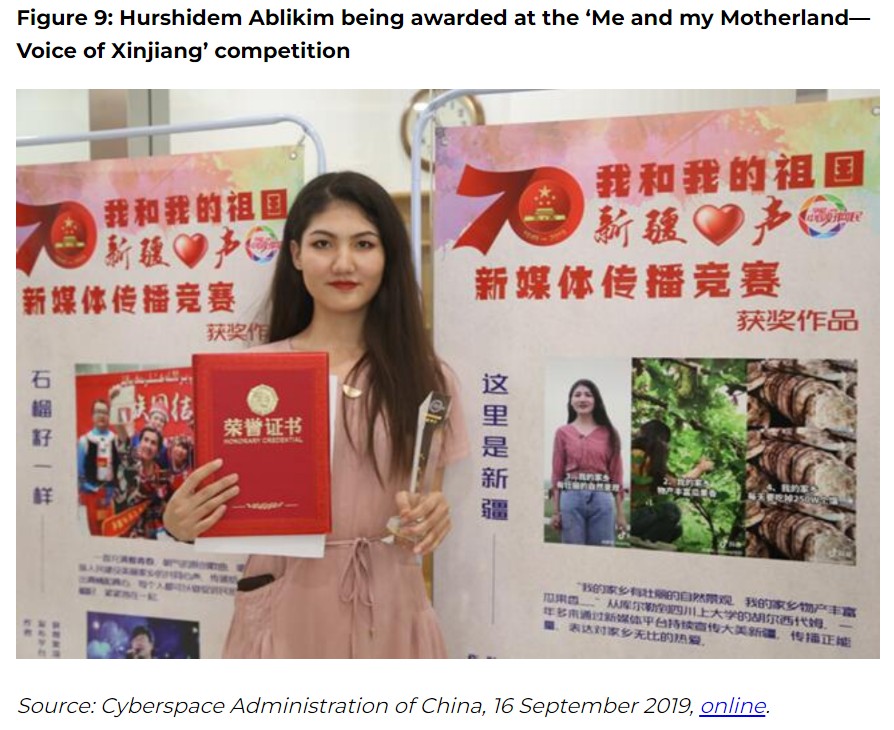
In the broader context of attempts by the Chinese Communist Party (CCP) to censor speech, promote disinformation and seed the internet with its preferred narratives, we focus on a small but increasingly popular set of YouTube accounts that feature mainly female China-based ethnic-minority influencers from the troubled frontier regions of Xinjiang, Tibet and Inner Mongolia, hereafter referred to as ‘frontier influencers’ or ‘frontier accounts’.
Despite being blocked in China, YouTube is seen by the CCP as a key battlefield in its ideological contestation with the outside world, and YouTube’s use in foreign-facing propaganda efforts has intensified in recent years. Originally deployed on domestic video-sharing platforms to meet an internal propaganda need, frontier-influencer content has since been redirected towards global audiences on YouTube as part of the CCP’s evolving efforts to counter criticisms of China’s human rights problems and burnish the country’s image.
Alongside party-state media and foreign vloggers, these carefully vetted domestic vloggers are increasingly seen as another key part of Beijing’s external propaganda arsenal. Their use of a more personal style of communication and softer presentation is expected to be more convincing than traditional party-state media content, which is often inclined towards the more rigid and didactic. For the CCP, frontier influencers represent, in the words of one Chinese propaganda expert, ‘guerrillas or militia’ fighting on the flanks in ‘the international arena of public opinion’, while party-state media or the ‘regular army’ ‘charge, kill and advance on the frontlines’.
Influencers are the new face of Chinese propaganda. Hidden amongst the vlogs about puppies and makeup, they clandestinely allow Beijing to whitewash its crimes against humanity. Despite being blocked in China, YouTube has become a key ideological battleground for the Chinese Communist Party. And they have created a whole new ecosystem of influencers who tow the party line. From looking at these videos, these Uygher influencers portray their homeland of Xinjiang as idyllic and prosperous. However, numerous and credible reports document China’s ongoing crimes against the Uygher population – from rape, forced sterilization to slave labor. Daria Impiombato, a Researcher at The Australian Strategic Policy Institute, and her team, watched over 1,700 of these videos. Soon enough, they found a worrying grey area in which these influencers operate. Through working for ‘multi-channel networks’ or MCNs,. These “influencer agencies”, with state-approved VPN networks, allow them to circumnavigate the all-powerful “Great Firewall of China”. However, these agencies are linked to the Chinese Communist Party, and their content must strictly follow Chinese law. Beijing’s propaganda machine is attempting to control the narrative, not just within their borders, but directly within your algorithms too.
Table 1: Frontier accounts on YouTube with more than 2,000 followers
To interact with the hyperlinks, please download the full report.
Figure 18: A video on the Ayituna (阿依图娜) channel describing the beautiful hair of the women in the vlogger’s family
Figure 24: Screenshots of posts from the @Maryamugul Twitter account featuring frontier influencer vide
Source: ‘Xinjiang Mali’ [新疆玛丽], Twitter, 9 October 2021, online; ‘Xinjiang Mali’ [新疆玛丽], Twitter, 27 May 2021, online.
The now-suspended @LeonaBenjamin18 Twitter account shares the same name and profile picture as the currently active @Maryamugul Twitter account
Source: Twitter.
Xiaowu Brothers’ post outlining ‘detailed rules for the review of online short video content’
Source: ‘Xiaowu Brothers’ [杭州小五和她的兄弟们科技有限公司], Facebook, 30 December 2021, online.
Meta’s blog post on Xiaowu Brothers’ success story
Xiaowu Technology joint party branch held an organisational life meeting and carried out a criticism and self-criticism session of party members
Source: ‘Jincheng Xiaowu Technology’ [晋城小五科技], Weixin, 1 April 2022, online.
Pre-roll advertisements on videos about Xinjiang cotton, appearing on the ‘Annie Guli’ and ‘Chinar girl on horseback’ YouTube accounts, and a pop-up ad on the ‘GuLi XinJiang’ account
From Xi’s point of view, the image of China and its frontier regions is distorted by negative portrayals from ‘foreign forces’ used to contain the country’s rise. Creating a ‘credible, lovable, and respectable image’ of China’s frontier regions is meant to cultivate a favourable domestic and external environment for the PRC that will, in turn, facilitate the country’s stability, development and global power. The emergence of ethnic-frontier accounts on platforms blocked in China is another sign of Beijing’s willingness to experiment in building its global voice.
The party-state is concerned that opening up access to social media platforms and other interactive channels to regular Chinese people will expose them to the risk that they’ll be influenced by the West’s superior ‘discourse power’ and undermine the CCP’s political project. Far from encouraging widespread participation of Chinese internet users on foreign platforms, the CCP has continued to restrict them from engaging in dialogue across the firewall, indicating that the party-state doesn’t trust Chinese citizens to ‘tell China’s story well’ unless they’re led and guided through designated channels.
Frontier-influencer accounts are increasingly used as an emerging part of Beijing’s growing propaganda arsenal. They’re seen as a resource to be drawn on, but only if they’re harnessed properly. At present, their effectiveness appears to be mostly limited to the global Chinese diaspora. But, as Beijing continues to ramp up political control over social media content production and bring official discourse and self-expression further into line, more of these seemingly authentic accounts are likely to be unleashed onto the world.
What’s more, TikTok is reportedly paying an army of influencers to descend on Washington DC over three days this week, courting lawmakers in the hopes of staving off a ban.
“Lawmakers in Washington debating TikTok should hear firsthand from people whose lives would be directly affected by their decisions,” said TikTok spokesperson Jamal Brown (h/t Politico). “We look forward to welcoming our creators to our nation’s capital, helping them make their voices heard, and continuing to drive meaningful impact in their lives and for their communities.”
Governments around the world, including in the US at both the federal and state levels, have grown increasingly wary of TikTok in recent months, primarily over national security-related concerns stemming from the Chinese company ByteDance that launched the app.
A Forbes investigation, meanwhile, was the first to report on the surveillance of journalists by employees within TiKTok’s parent company who were searching for the source of leaks.