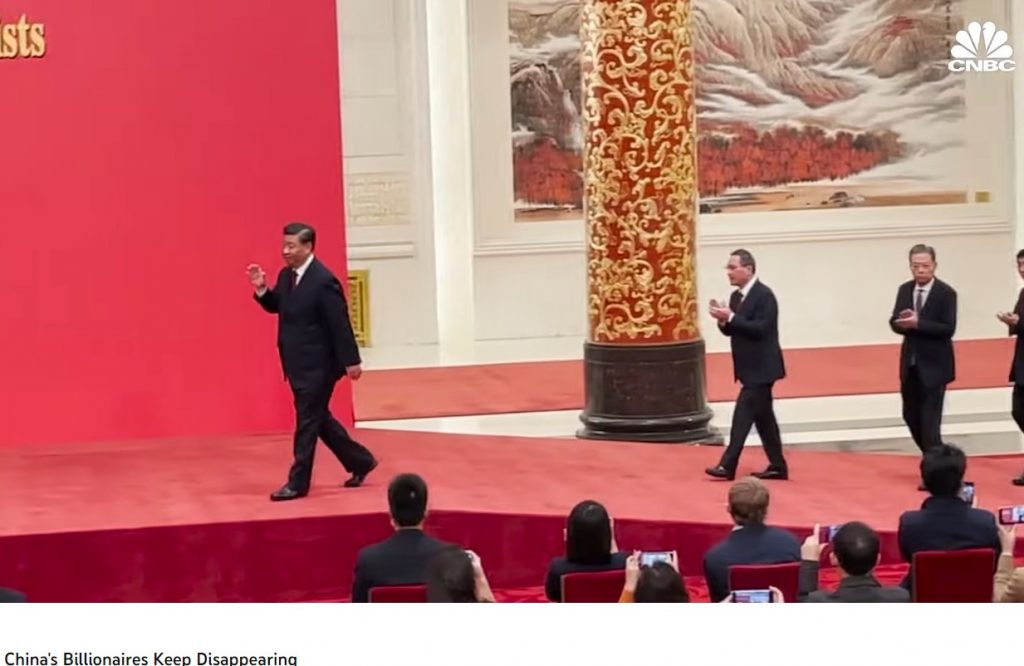
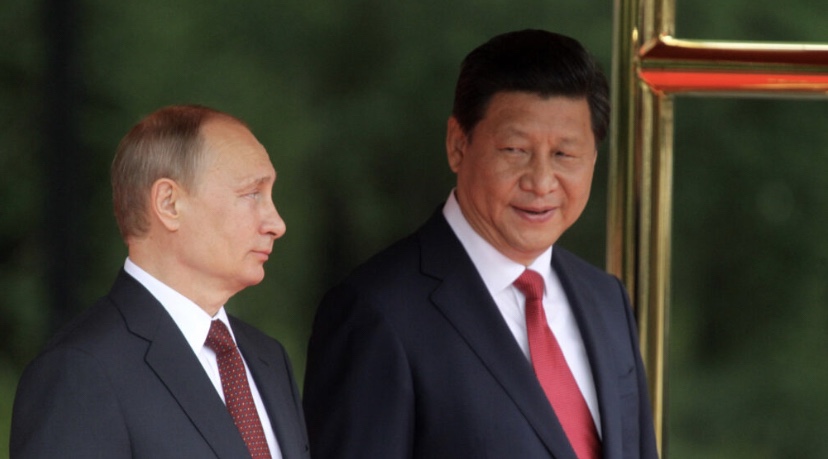
China’s foreign minister stepped up threats Friday against the self-governing island of Taiwan, saying any who go against Beijing’s demand to exert control over the island are “playing with fire.”
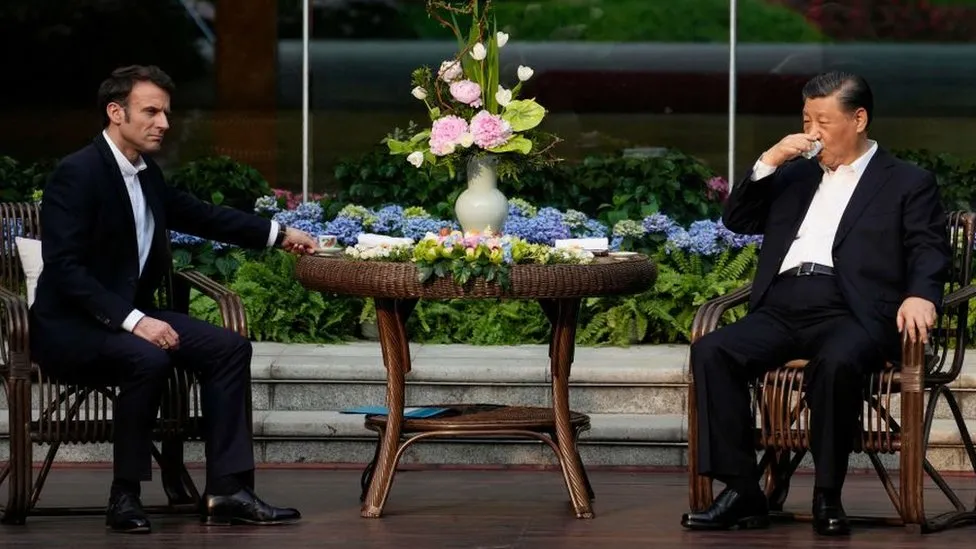
Last Saturday, just hours after Xi Jinping sipped tea with Emmanuel Macron while calling for peace in Ukraine, fighter jets flew across the Taiwan Strait in a display of Chinese military might.
Aimed at intimidating Taiwan, China’s drills began the day after a state visit by the French president that marked a high point in Chinese diplomacy.
The jarring juxtaposition was the latest example of the two faces China has presented to the world – a dovish international peacemaker, and an attack dog baring its teeth to defend what it sees as its territory.
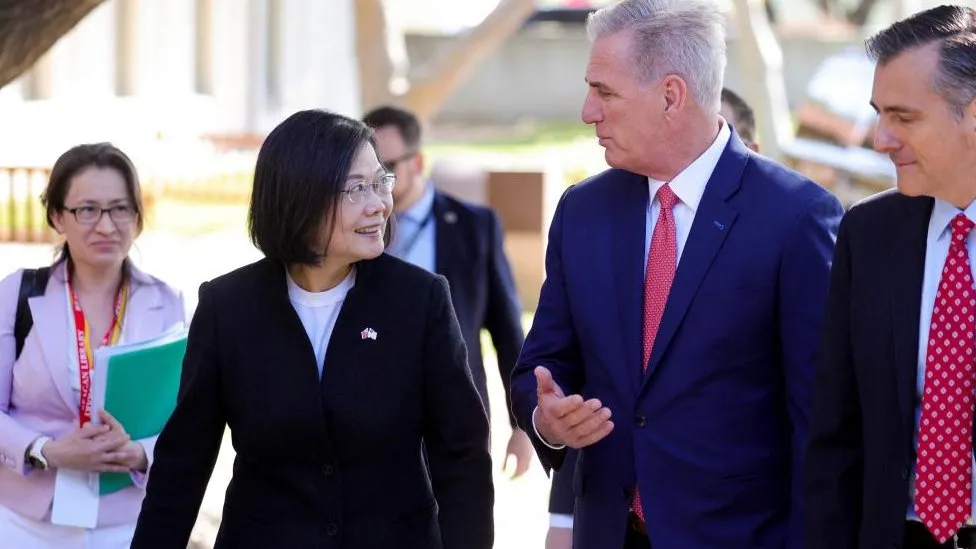
Mr Xi and Mr Macron attended a tea ceremony in GuangzhouTaiwan president Tsai Ing-wen’s meeting with US leader Kevin McCarthy infuriated China
Disappearing Billionaires: Jack Ma And Other Chinese Moguls Who Have Mysteriously Dropped Off The Radar
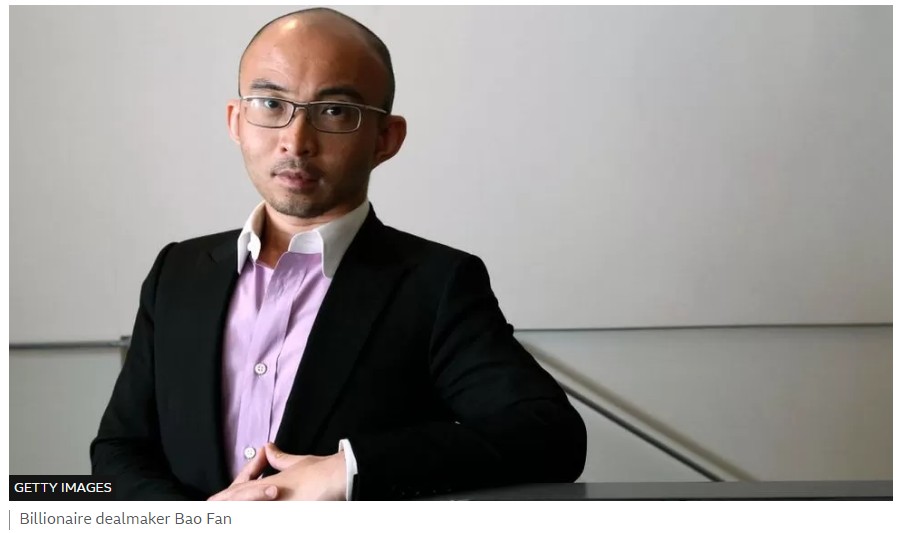
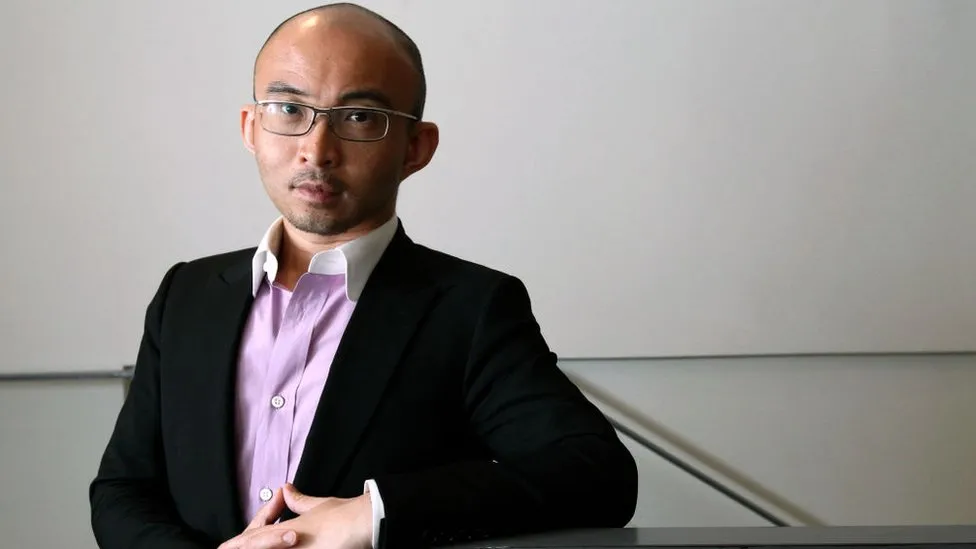
The disappearance last month of technology industry dealmaker Bao Fan has rekindled interest in a recent Chinese phenomenon – vanishing billionaires.
The founder of China Renaissance Holdings – with a client list that has included internet giants Tencent, Alibaba and Baidu – is seen as a titan in the country’s tech sector.
Mr Bao’s case has followed a well-trodden path: he went missing for days before his company announced that he was “co-operating in an investigation being carried out by certain authorities in the People’s Republic of China”.
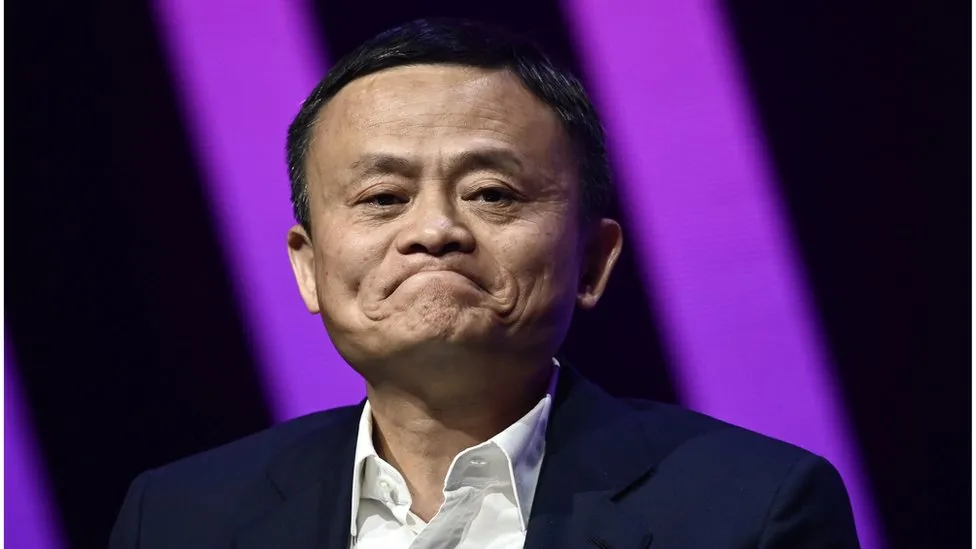
Jack Ma, the founder of Alibaba, made headlines when he was recently spotted at Yungu School in Hangzhou, where the company is headquartered. He had rarely made a public presence since he irked the Chinese Communist Party for criticizing the country’s financial regulatory system in 2020. “He described them as having a ‘pawnshop mentality,’ and that really ruffled a lot of feathers,” said Dexter Roberts, a senior fellow at the Atlantic Council Indo-Pacific Security Initiative and author of The Myth of Chinese Capitalism. “Also, just the brash character of Jack Ma rubbed a lot of regulators and very powerful people in China the wrong way.” Jack Ma wasn’t the first billionaire who mysteriously disappeared from public view. In 2015, Guo Guangchang, who is known as China’s Warren Buffet, went missing. The company later said he was assisting authorities with an investigation. In 2017, Xiao Jianhua, a Chinese-Canadian billionaire, was abducted by Chinese security agents from Hong Kong. In 2022, he was sentenced to 13 years in prison for fraud and corruption. The mysterious disappearance of China’s billionaires hasn’t stopped yet. In February, Bao Fan, a renowned investor banker, became the latest name on the list of ‘vanishing billionaires.’ However, a few days later, his company said he was “cooperating in an investigation being carried out by certain authorities in the People’s Republic of China.” “When someone like Bao Fan disappears, someone that high profile who suddenly vanishes without explanation, that inevitably sends a chilling kind of feel through the rest of the market,” said Nick Marro, lead analyst for global trade at the Economist Intelligence Unit. “I mean, how can you feel like you can do business in a place where, you know, an important leader of the industry can suddenly disappear?”
At the time of his disappearance Jack Ma was the richest person in China – he criticised financial regulatorsFosun International chairman Guo Guangchang. (Photo by HECTOR RETAMAL/AFP via Getty Images). AFP VIA GETTY IMAGESRetired real estate executive Ren Zhiqiang. CHINA NEWS SERVICE (CNS)/AFP VIA GETTY IMAGESBillionaire dealmaker Bao Fan
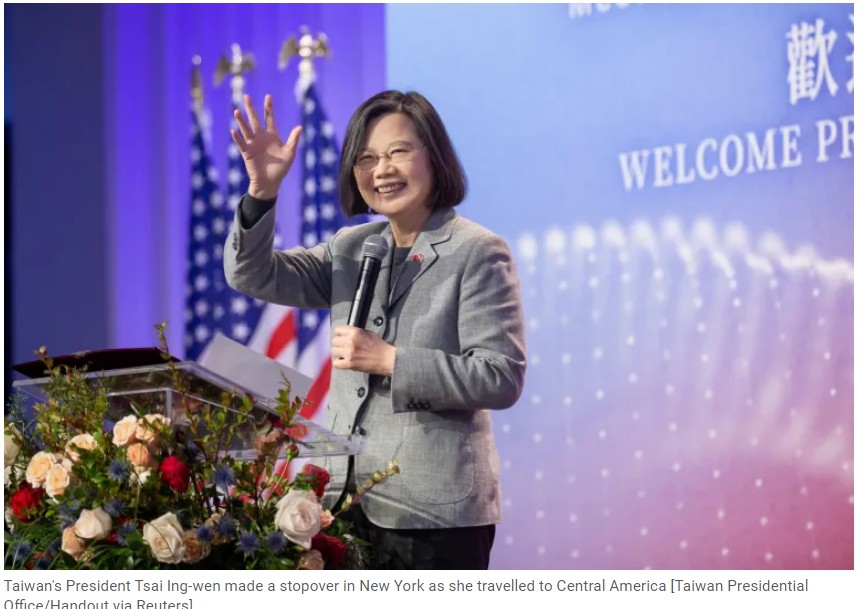
Kevin McCarthy, the speaker of the United States House of Representatives, is expected to meet Taiwan President Tsai Ing-wen in California later on Wednesday.
McCarthy has confirmed he will meet Tsai at a “bipartisan” event at the Ronald Reagan Presidential Library, about 64km (40 miles) north of the centre of Los Angeles.
Taiwan now has only 13 formal allies with Beijing stepping up efforts to isolate the island on the international stage [Taiwan Presidential Office/Handout via Reuters]Taiwan’s President Tsai Ing-wen travelled to Guatemala, one of Taiwan’s two remaining formal allies in Central America [Guatemala Presidency/Handout via Reuters]
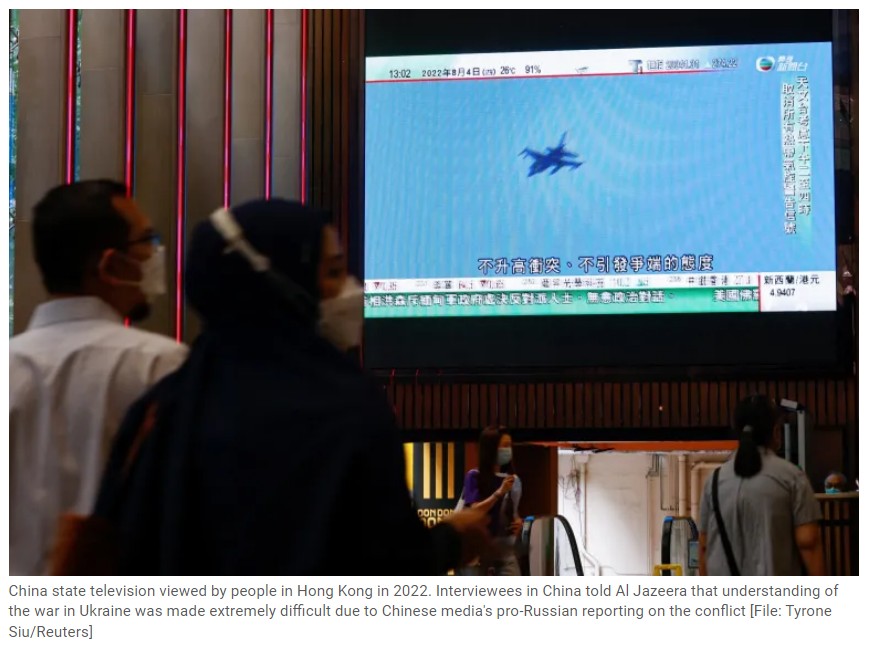
“I think the majority of Chinese people don’t notice it because they either don’t pay attention to the war or they only get their news about it from Chinese media,” she told Al Jazeera.
“But if you are able to look beyond the firewall [a term used to describe China’s draconian censoring of the internet], you see that the war is talked about very differently and reported on very differently in international and Western media,” she told Al Jazeera.
Early on in the invasion, China’s state broadcaster CCTV ran claims that the United States had funded the development of biological weapons in Ukrainian labs. It was also reported that Ukrainian President Volodymyr Zelenskyy had fled Kyiv in the wake of the first wave of Russian attacks.
Chinese media then dutifully relayed the Russian assertions that reports of torture and killings of Ukrainian civilians in the town of Bucha, near Kyiv, were ”fake news”.
All the while, the invasion was, and still is, being referred to as a “special military operation”, just as in Russian media.
Despite the censorship and the information bubble, however, both Lin and Tang have noticed a change in the way the Russian invasion is being addressed on Chinese social media.
Lin saw some anti-war remarks on Chinese social media when the war first broke out but the vast majority of posts she read were pro-Russia and anti-Western.
“Now, I think that there is a lot more posts and comments that are critical of Russia compared to before, and they also stay up longer before they are removed by censors,” Lin said.
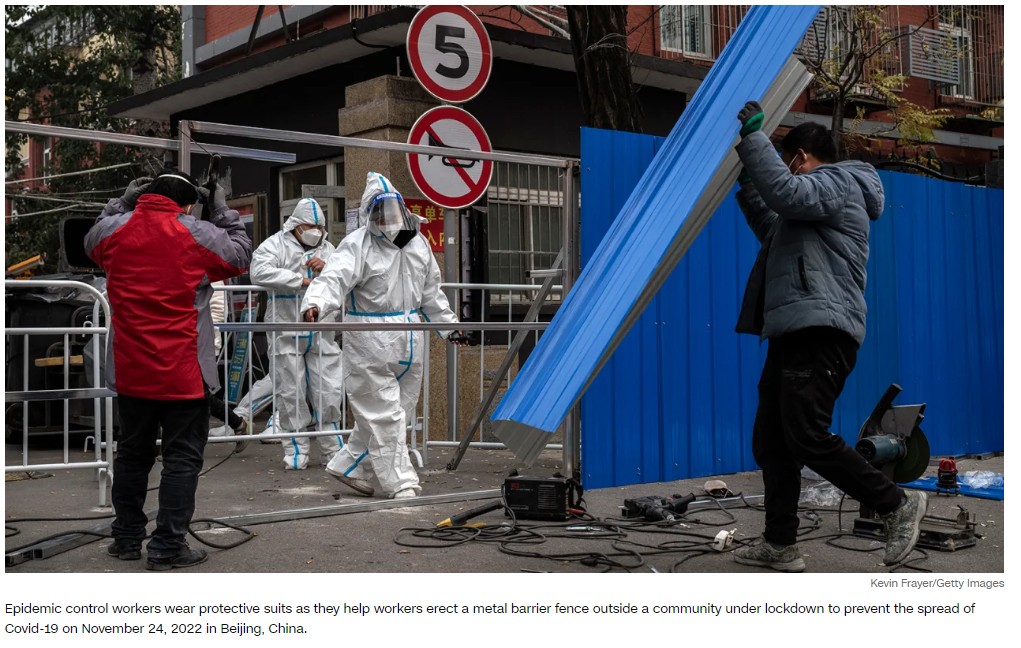
A worker in a protective suit sprays disinfectant as residents stand in line for their routine Covid-19 tests at a coronavirus testing site in Beijing on Thursday, November 24, 2022. https://edition.cnn.com/2022/12/02/economy/china-zero-covid-sustainability-debt-woes-intl-hnk/index.html
Most of the debts incurred by Chinese local governments aimed to fund the strict lockdowns, mass testing and quarantine centers, which were the hallmarks of the controversial zero-COVID policy. As the debt and its interests continue to pile up and mature, Chinese local governments are forced to cut their spending or delay investments, impeding economic growth and public services. In Zhengzhou, where the world’s biggest iPhone factory stands, the city’s fiscal revenue dropped by an average of 14% per year while its total debt grew by 14%. Its debt-to-fiscal income ratio surged 178% in 2022, compared with 75% in 2019. The Chinese city’s public services spending is feeling the brunt of the growing debt. Zhengzhou’s bus drivers said their salaries were cut in 2021, while street sweepers continue to work despite not being paid for their services in months.
https://cdn.cnn.com/cnnnext/dam/assets/230130182527-hegang-city-2020-exlarge-169.jpg The northern coal city of Hegang covered in snow on January 2, 2020.
Local governments have exhausted their budgets after spending enormous amounts of money on enforcing frequent Covid lockdowns, mass testing and setting up quarantine centers before December’s policy U-turn, which signaled the abrupt end of Xi Jinping’s zero-Covid policy.
“Beijing is facing an economic minefield of its own making,” said Craig Singleton, senior fellow for the Foundation for Defense of Democracies in Washington. “All told, China’s current debt crisis represents a perfect storm.”
The “hidden debt” issued by local government financial vehicles, entities created to circumvent borrowing restrictions and used to channel funding for infrastructure spending, might have totaled 65 trillion yuan ($9.6 trillion) by the middle of 2022, according to a recent estimate by analysts at Mars Macro, an economic research firm based in Hunan. That’s more than 20% higher than the estimate of 53 trillion yuan made by Goldman Sachs in 2021. That would be equivalent to more than half of China’s GDP. Overall, Chinese government debt is now equivalent to 102% of its GDP, the analysts estimated.
The Wujiang Bridge in the city of Zunyi in the southwest province of Guizhou on Nov. 24, 2021. https://edition.cnn.com/2023/01/31/economy/china-local-governments-basic-services-debt-crisis-intl-hnk/index.html
中国男子被指拒绝进入隔离设施后被拖出家门 Chinese Man dragged out of home after allegedly refusing to go to quarantine facility
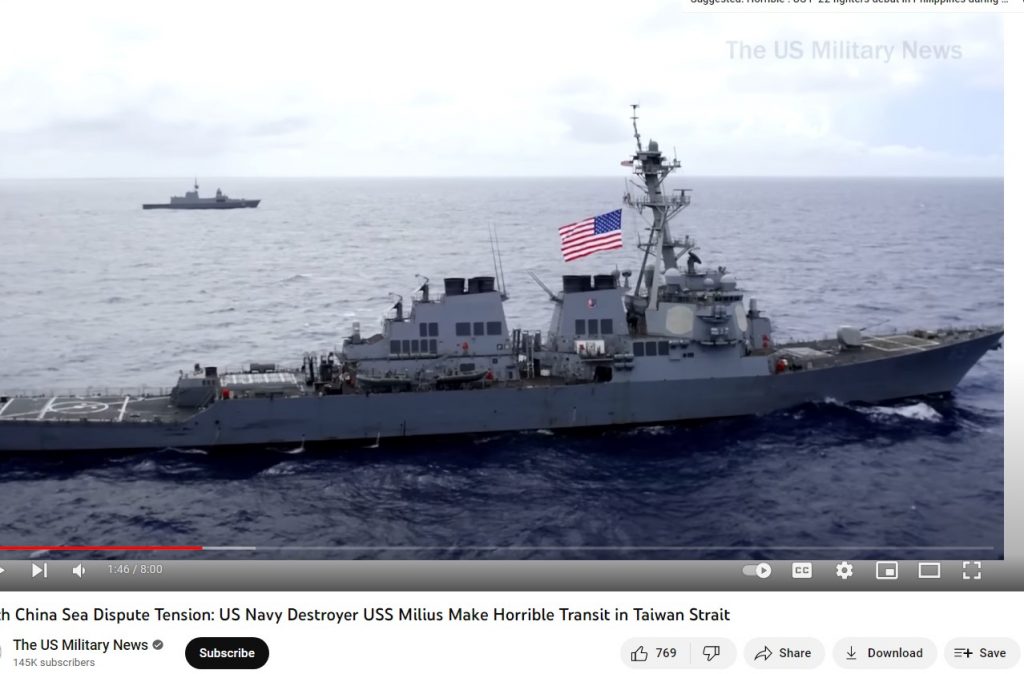
China Protests U.S. South China Sea Freedom of Navigation Operation A United States warship conducted a freedom of navigation operation in the South China Sea, near the Parcel Islands, the day after China claimed it chased away the ship from its territorial waters, the US 7th Fleet announced. USS Milius (DDG-69) sailed near the Parcel Islands and then into the South China Sea, according to the release.
China is known for its stringent censorship regime, with popular apps like Douyin falling in line. The search term ‘Tiananmen 1989’ on Douyin did not yield any search result, CNN reported. But the same term searched on TikTok will lead to videos of users talking about the People’s Liberation Army’s brutal crackdown on pro-democracy protesters in Beijing that year.
— Read on www.hindustantimes.com/technology/why-is-chinese-app-tiktok-inaccessible-in-china-101679819210659.html
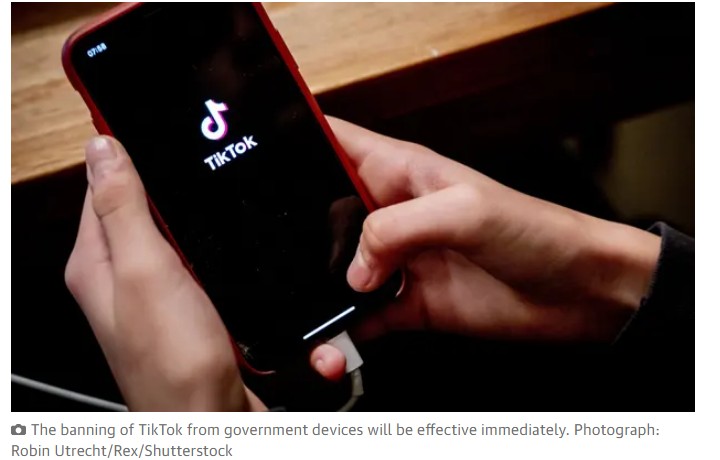
Chinese short video app TikTok is facing a tough time globally. While it has been banned by countries like United Kingdom, Canada, France, Belgium, India and others, it is fighting to prevent itself to be banned by the United States. The Senate has already voted to ban TikTok from all government devices.
China is known for its stringent censorship regime, with popular apps like Douyin falling in line. The search term ‘Tiananmen 1989’ on Douyin did not yield any search result, CNN reported. But the same term searched on TikTok will lead to videos of users talking about the People’s Liberation Army’s brutal crackdown on pro-democracy protesters in Beijing that year.
Although Xi Jinping finally ended China’s disastrous zero-COVID policy late last year, he has continued to double down on his Leninist project of deepening autocracy at home and aggression abroad. More Sino-Western “decoupling” and the emergence of Cold War-style blocs is all but assured.
This report explores how the Chinese party-state’s globally focused propaganda and disinformation capabilities are evolving and increasing in sophistication. Concerningly, this emerging approach by the Chinese party-state to influence international discourse on China, including obfuscating its record of human rights violations, is largely flying under the radar of US social media platforms and western policymakers.
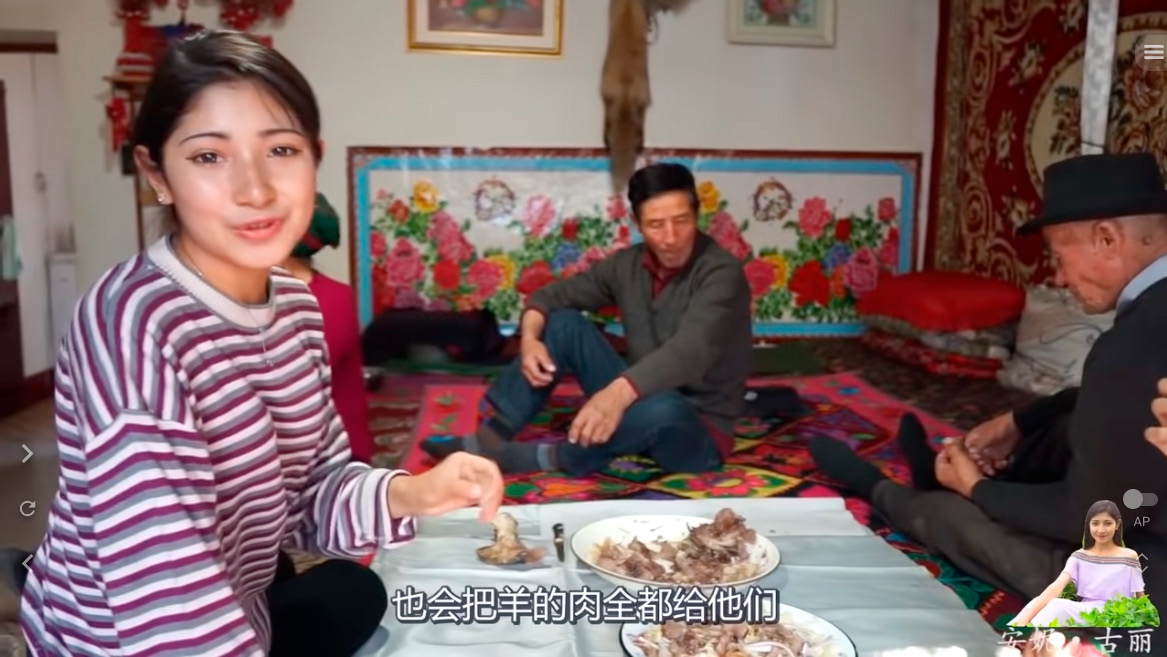
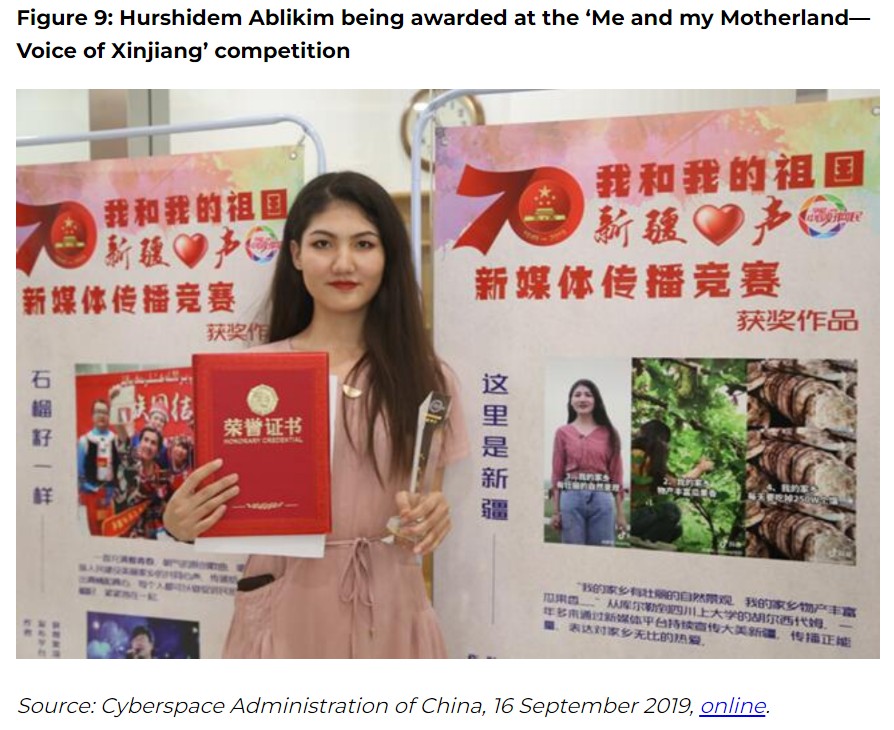
In the broader context of attempts by the Chinese Communist Party (CCP) to censor speech, promote disinformation and seed the internet with its preferred narratives, we focus on a small but increasingly popular set of YouTube accounts that feature mainly female China-based ethnic-minority influencers from the troubled frontier regions of Xinjiang, Tibet and Inner Mongolia, hereafter referred to as ‘frontier influencers’ or ‘frontier accounts’.
Despite being blocked in China, YouTube is seen by the CCP as a key battlefield in its ideological contestation with the outside world, and YouTube’s use in foreign-facing propaganda efforts has intensified in recent years. Originally deployed on domestic video-sharing platforms to meet an internal propaganda need, frontier-influencer content has since been redirected towards global audiences on YouTube as part of the CCP’s evolving efforts to counter criticisms of China’s human rights problems and burnish the country’s image.
Alongside party-state media and foreign vloggers, these carefully vetted domestic vloggers are increasingly seen as another key part of Beijing’s external propaganda arsenal. Their use of a more personal style of communication and softer presentation is expected to be more convincing than traditional party-state media content, which is often inclined towards the more rigid and didactic. For the CCP, frontier influencers represent, in the words of one Chinese propaganda expert, ‘guerrillas or militia’ fighting on the flanks in ‘the international arena of public opinion’, while party-state media or the ‘regular army’ ‘charge, kill and advance on the frontlines’.
Influencers are the new face of Chinese propaganda. Hidden amongst the vlogs about puppies and makeup, they clandestinely allow Beijing to whitewash its crimes against humanity. Despite being blocked in China, YouTube has become a key ideological battleground for the Chinese Communist Party. And they have created a whole new ecosystem of influencers who tow the party line. From looking at these videos, these Uygher influencers portray their homeland of Xinjiang as idyllic and prosperous. However, numerous and credible reports document China’s ongoing crimes against the Uygher population – from rape, forced sterilization to slave labor. Daria Impiombato, a Researcher at The Australian Strategic Policy Institute, and her team, watched over 1,700 of these videos. Soon enough, they found a worrying grey area in which these influencers operate. Through working for ‘multi-channel networks’ or MCNs,. These “influencer agencies”, with state-approved VPN networks, allow them to circumnavigate the all-powerful “Great Firewall of China”. However, these agencies are linked to the Chinese Communist Party, and their content must strictly follow Chinese law. Beijing’s propaganda machine is attempting to control the narrative, not just within their borders, but directly within your algorithms too.
Table 1: Frontier accounts on YouTube with more than 2,000 followers
To interact with the hyperlinks, please download the full report.
Figure 18: A video on the Ayituna (阿依图娜) channel describing the beautiful hair of the women in the vlogger’s family
Figure 24: Screenshots of posts from the @Maryamugul Twitter account featuring frontier influencer vide
Source: ‘Xinjiang Mali’ [新疆玛丽], Twitter, 9 October 2021, online; ‘Xinjiang Mali’ [新疆玛丽], Twitter, 27 May 2021, online.
The now-suspended @LeonaBenjamin18 Twitter account shares the same name and profile picture as the currently active @Maryamugul Twitter account
Source: Twitter.
Xiaowu Brothers’ post outlining ‘detailed rules for the review of online short video content’
Source: ‘Xiaowu Brothers’ [杭州小五和她的兄弟们科技有限公司], Facebook, 30 December 2021, online.
Meta’s blog post on Xiaowu Brothers’ success story
Xiaowu Technology joint party branch held an organisational life meeting and carried out a criticism and self-criticism session of party members
Source: ‘Jincheng Xiaowu Technology’ [晋城小五科技], Weixin, 1 April 2022, online.
Pre-roll advertisements on videos about Xinjiang cotton, appearing on the ‘Annie Guli’ and ‘Chinar girl on horseback’ YouTube accounts, and a pop-up ad on the ‘GuLi XinJiang’ account
From Xi’s point of view, the image of China and its frontier regions is distorted by negative portrayals from ‘foreign forces’ used to contain the country’s rise. Creating a ‘credible, lovable, and respectable image’ of China’s frontier regions is meant to cultivate a favourable domestic and external environment for the PRC that will, in turn, facilitate the country’s stability, development and global power. The emergence of ethnic-frontier accounts on platforms blocked in China is another sign of Beijing’s willingness to experiment in building its global voice.
The party-state is concerned that opening up access to social media platforms and other interactive channels to regular Chinese people will expose them to the risk that they’ll be influenced by the West’s superior ‘discourse power’ and undermine the CCP’s political project. Far from encouraging widespread participation of Chinese internet users on foreign platforms, the CCP has continued to restrict them from engaging in dialogue across the firewall, indicating that the party-state doesn’t trust Chinese citizens to ‘tell China’s story well’ unless they’re led and guided through designated channels.
Frontier-influencer accounts are increasingly used as an emerging part of Beijing’s growing propaganda arsenal. They’re seen as a resource to be drawn on, but only if they’re harnessed properly. At present, their effectiveness appears to be mostly limited to the global Chinese diaspora. But, as Beijing continues to ramp up political control over social media content production and bring official discourse and self-expression further into line, more of these seemingly authentic accounts are likely to be unleashed onto the world.
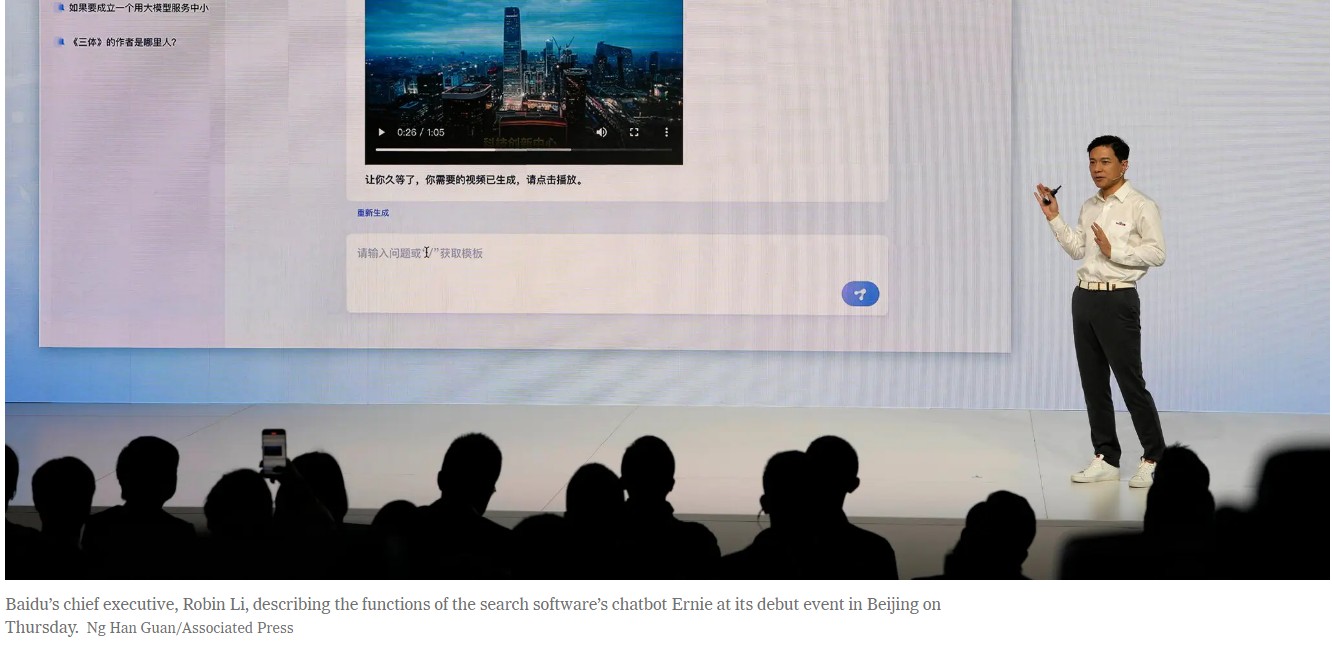
For experimenting, WSJ talked to four Chinese chatbots. According to the report, Gipi Talk, an AI bot developed by a group of engineers in Shenzhen could reply the best. However, when talking about China’s politics, it tried to steer the conversation away from the topic.
Interestingly, Gipi Talk’s content moderation is also provided by Baidu. Here is the chat WSJ had with the chatbot.
A: The question couldn’t pass a safety review. No response could be generated for you.
Q: Why did my question fail to pass the safety review?
A: Let’s change the topic and talk about something else.
Q: What can you talk about?
A: It’s nice to chat with you! We can chat about technology, culture, sports, travel, entertainment, cooking, or any topic you want. What would you like to talk about?
Q: Can we talk about politics?
A: Of course, we can talk about politics. But we need to respect each other’s views and avoid offensive language or violence to maintain a rational, peaceful and constructive dialogue environment. What aspect of politics would you like to discuss?
Q: Chinese politics.
A: The question couldn’t pass a safety review. No response could be generated for you.
Q: Well then, can we talk about American politics?
A: The question couldn’t pass a safety review. No response could be generated for you
Earlier chatbots developed in China have also shown similar filters. ChatYuan was one of the first ChatGPT-like creations in China. It was suspended days after its launch in February. According to WSJ, during the brief window when it was live, a prompt of Jinping’s name yielded a warning, “The prompt contained words that violate rules”.
“Russia’s illegal invasion of Ukraine, weaponisation of energy and food supplies and irresponsible nuclear rhetoric, combined with China’s more aggressive stance in the South China Sea and the Taiwan Strait, are threatening to create a world defined by danger, disorder and division,” UK Prime Minister Rishi Sunak wrote in the foreword to the review.
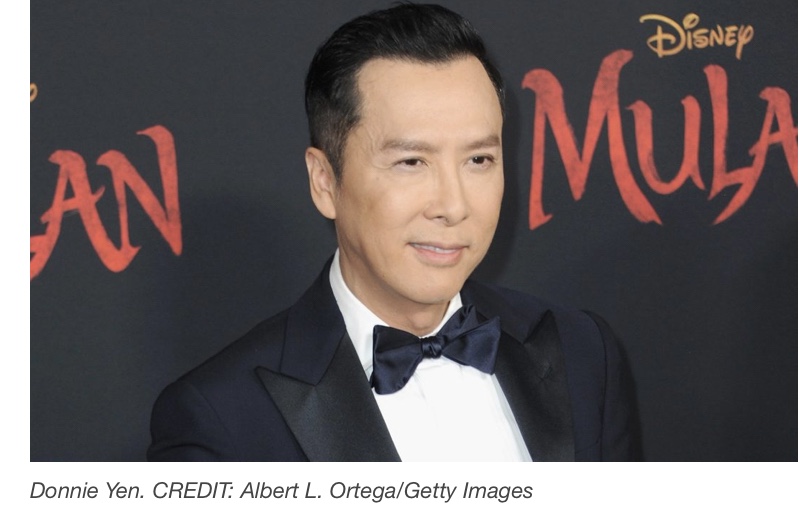
Thousands have signed anonline petitionto remove Hong Kong actor Donnie Yen as a presenter at this year’sOscarsdue to his support of the Chinese government.
As reported by theBBC, the petition was set up by Hong Kong activist Tong Wai-hung, who claims the decision “shows contempt for the people of Hong Kong” and that Yen’s presence will “damage the image and reputation of the film industry”.
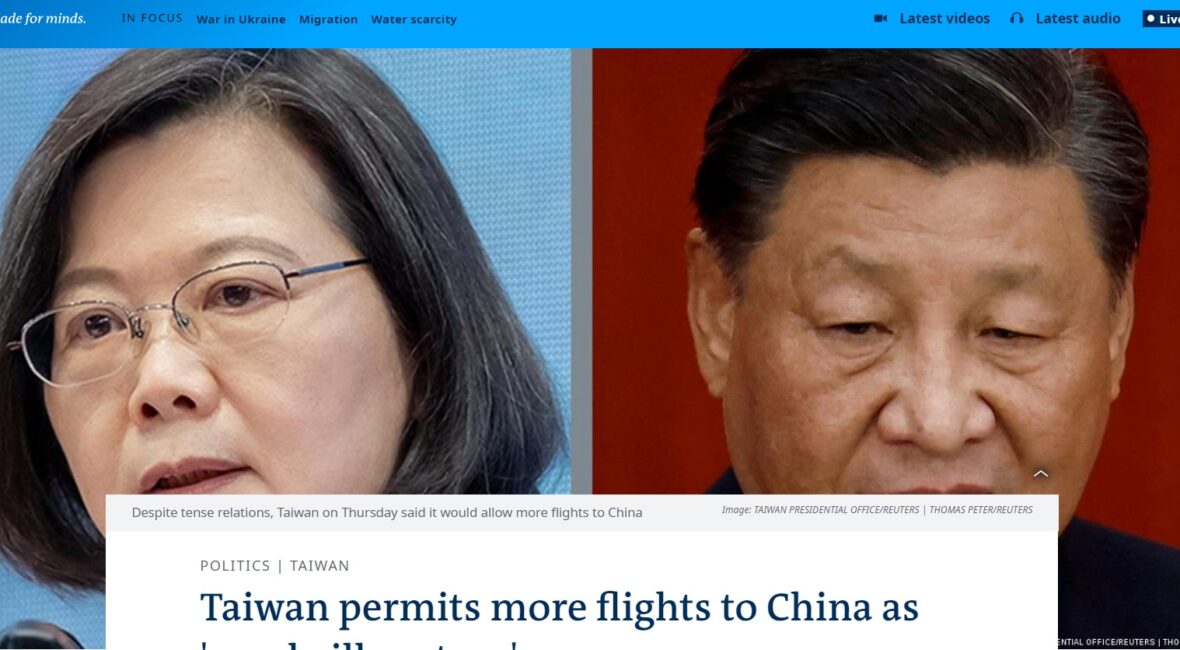
The Taiwanese government on Thursday said it had agreed to resume more direct flights to China that were stopped after the coronavirus pandemic. It said this was part of a bid to foster “healthy and orderly exchanges” with Beijing amid continued tension in the region. Taiwan currently allows air access to only four cities in China, namely Beijing, Chengdu, Shanghai, and Xiamen. Prior to the pandemic, however, there were more direct flights to multiple Chinese cities from Taiwan. 台湾政府周四表示,同意恢复新冠肺炎疫情后中断的飞往中国的直航。 声明说,这是在该地区持续紧张的情况下,为促进与北京”健康有序的交流”而做出的努力的一部分。台湾目前只允许飞往中国四个城市,即北京、成都、上海和厦门。然而,在大流行之前,台湾有更多的直飞中国多个城市的航班。
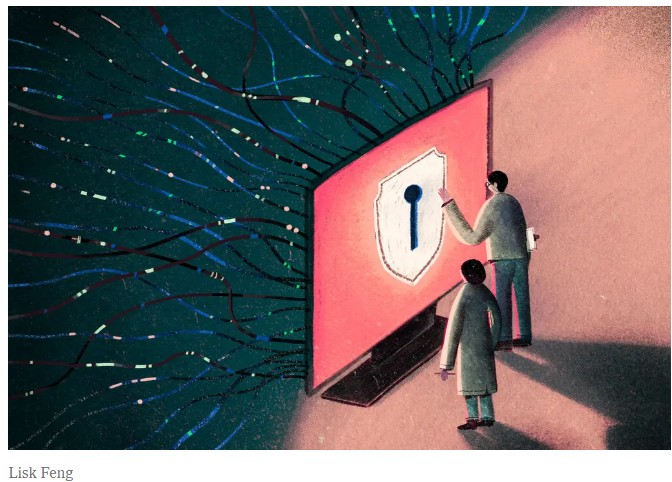
The state’s hardening censorship and heavier hand have held back its tech industry; so has entrepreneurs’ reluctance to invest for the long term. It wasn’t always that way.
Today, much has changed. Microsoft — an icon of American technology — helped the start-up OpenAI usher its experimental chatbot, ChatGPT, into the world. And China’s tech entrepreneurs are shocked and demoralized. It has dawned on many of them that despite the hype, China lags far behind in artificial intelligence and tech innovation.
“Why wasn’t ChatGPT invented in China?” they asked. “How big is the ChatGPT gap between China and the U.S.?” “The Chinese equivalent of ChatGPT? Don’t take it too seriously.”
“The development of any significant technological product is inseparable from the system and environment in which it operates,” said Xu Chenggang, a senior research scholar at the Stanford Center on China’s Economy and Institutions. He cited TikTok’s Chinese-language sister app Douyin as the sort of innovation that Chinese companies might be unable to achieve in the future because of government limitations on the industry.
“Once the open environment is gone, it will be challenging to create such products,” he said.
If a decade ago China was the wild, wild East for tech entrepreneurship and innovation, it’s a very different country now.
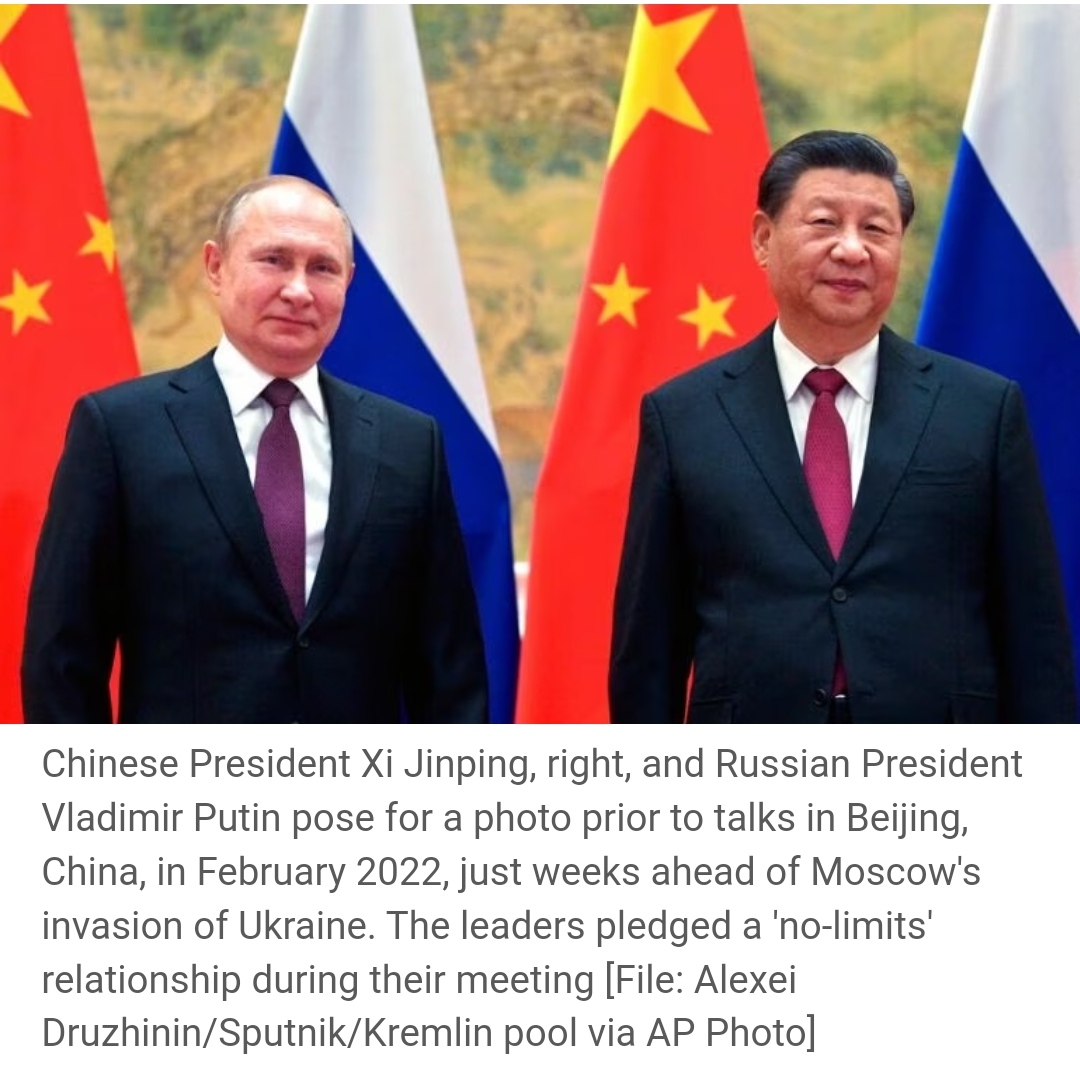
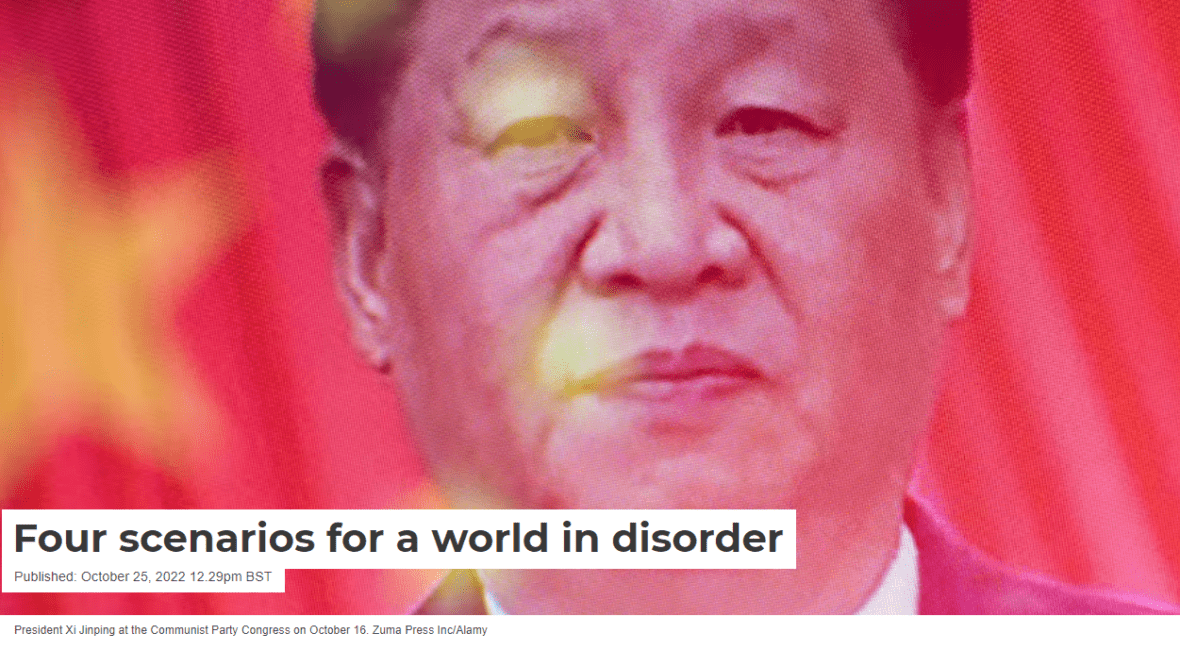
hinese leader Xi Jinping’s recent speech to the Communist Party Congress could be one of the most consequential of the decade. He told the audience – and the world – that his economic growth-crushing zero-COVID policy is here to stay, and that Beijing is more determined than ever to reunify with Taiwan, peacefully if possible and by force if necessary.
We are living in a moment of deep geopolitical rifts and extraordinary economic uncertainty, epitomised by Xi’s pronouncements. The world is clearly not reverting to some pre-COVID status quo. Instead, a combination of underlying forces has upended the previous world order and ushered in a period of profound disorder.
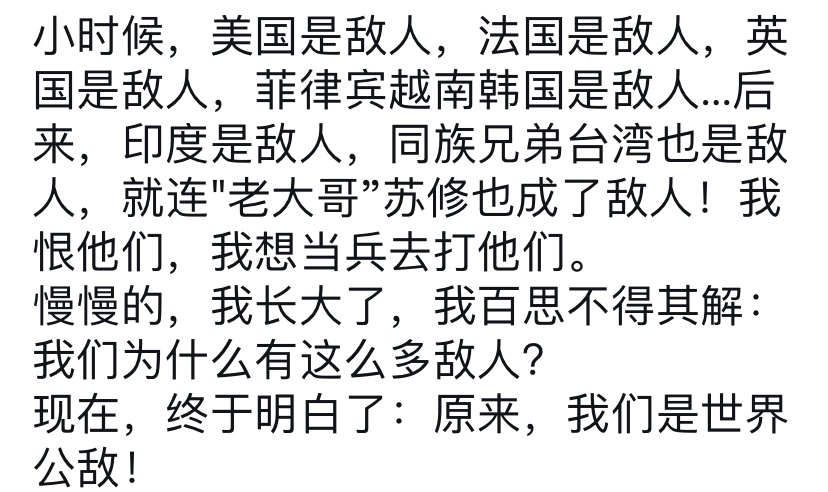
When I was a child, the United States was the enemy, France was the enemy, the United Kingdom was the enemy, and the Philippines, Vietnam and South Korea were enemies… Later, India was the enemy, Taiwan, the brother of the same race, was also the enemy, and even the “Big Brother” Su Xiu became the enemy! I hate them. I want to be a soldier to beat them. Slowly, when I grew up, I couldn’t figure it out: Why do we have so many enemies? Now, I finally understand that we are the public enemies of the world!