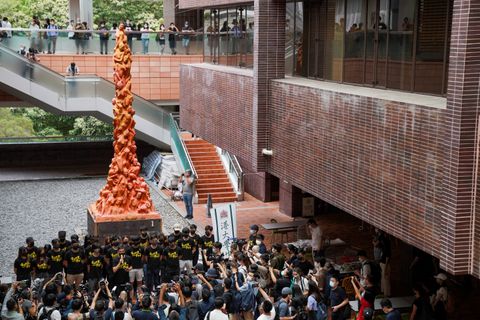
The two-tonne copper Pillar of Shame was first exhibited at a Tiananmen Square commemoration in Hong Kong in 1997, the same year Britain handed the city back to China.
In 2021, the University of Hong Kong dismantled and removed the statue “based on external legal advice and risk assessment for the best interest of the university”. It has since been kept in a cargo container on university-owned land.
Danish sculptor Jens Galschiot, who created the work, said he had not been informed about its seizure by police.
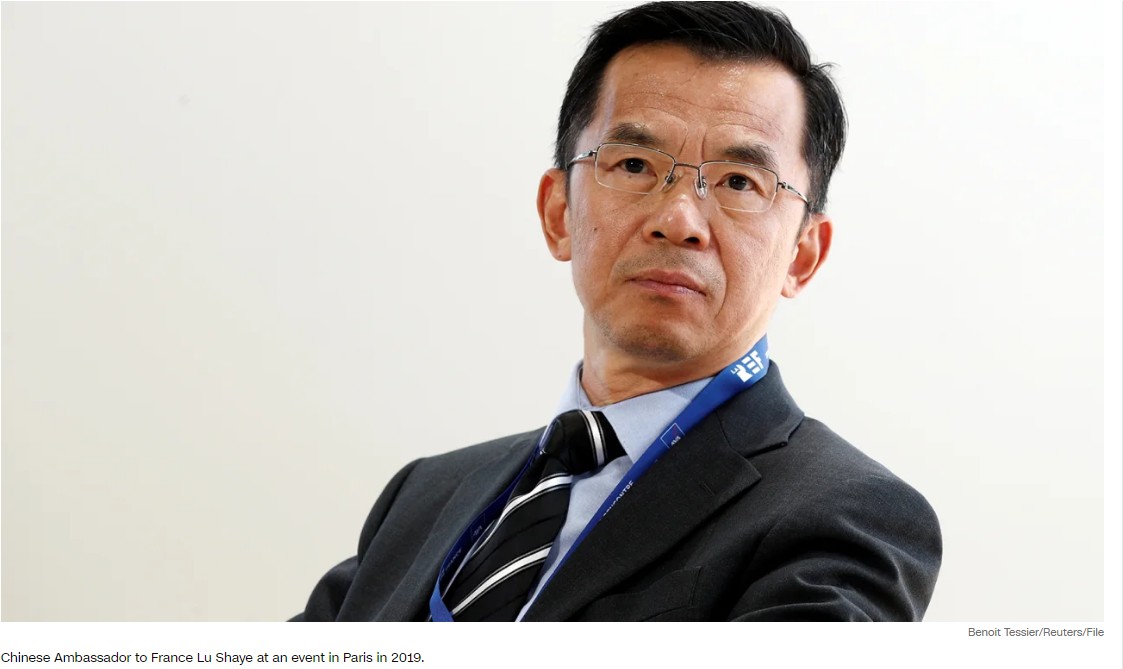
European countries are demanding answers from Beijing after its top diplomat in Paris questioned the sovereignty of former Soviet republics, in comments that could undermine China’s efforts to be seen as a potential mediator between Russia and Ukraine.
The remarks by China’s ambassador to France Lu Shaye, who said during a television interview that former Soviet countries don’t have “effective status in international law,” have caused diplomatic consternation, especially in the Baltic states.
https://www.cnn.com/2023/04/24/china/china-ambassador-lu-shaye-baltic-soviet-states-europe-intl-hnk/index.html Chinese Foreign Ministry spokesperson Mao Ning, pictured on April 24, when she said that China respects the “sovereign state status” of former Soviet Union countries.
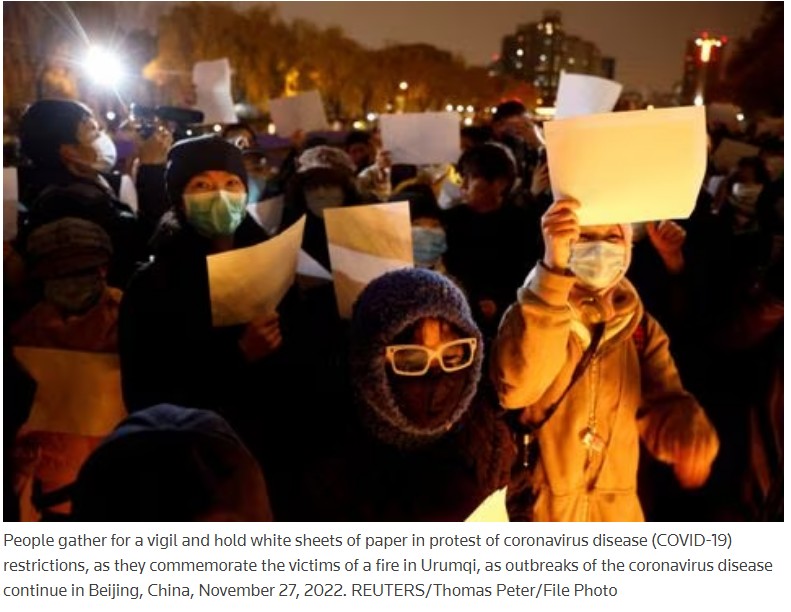
At least two Chinese women who joined historic “white paper” demonstrations in Beijing calling for an end to COVID-19 curbs were released on Wednesday after almost four months in detention, two of their friends told Reuters.
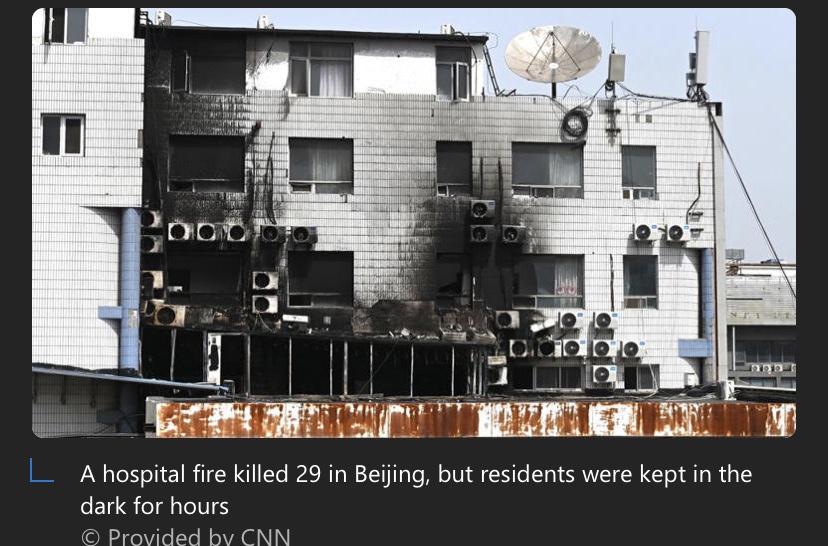
周二,二十年来袭击中国首都的最致命的火灾在一家医院造成29人死亡,但大多数人直到几个小时后才听说这件事,即使如此,由于当局对细节的严格保密,细节也很渺茫。The deadliest fire to hit the Chinese capital in two decades killed 29 people in a hospital Tuesday, but most people didn’t hear about it until several hours later, and even then the details were slim as authorities kept a tight lid on details.
The death toll from a fire at a Beijing hospital has risen to at least 29, with some people seen trapped and using bedsheets tied together to escape the flames. https://t.co/FFXQWx7KlEpic.twitter.com/I3KH8q84LL
Public anger is continuing to mount over the high death toll and initial attempts to clamp down on information about the incident, including censoring footage on social media at first.
A fire at a Beijing hospital has left more than two dozen dead, making it the Chinese capital's deadliest blaze in at least two decades. Dramatic videos on social media show people using tied bed sheets to escape the smoke and flames engulfing the Hospital https://t.co/VotEWSHk7Qpic.twitter.com/3WKSnjvCye
29 people, mostly patients, died in the terrible hospital fire in Beijing's Fengtai District on April 18. According to preliminary investigation, the fire was caused by sparks from renovation and construction work inside the hospital. The hospital director has now been detained. pic.twitter.com/ovfrBsFl3S
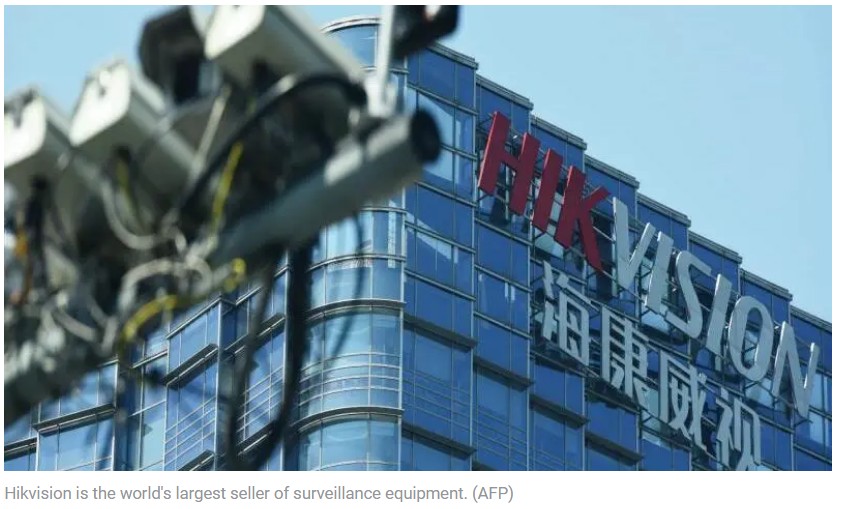
Chinese surveillance giant Hikvision has repeatedlydenied reports that the company is complicit in human rights abuses targeting Uyghurs in China’s northwestern region of Xinjiang.
But new details from an internal review of its contracts with police agencies in the region reveal the company has known since at least 2020 that some of its Xinjiang contracts were a “problem” because they included language about targeting Uyghurs as a group, according to a recording of a recent private company meeting obtained by technology trade publication IPVM and exclusively shared with Axios.
Why it matters: The Chinese government is perpetrating an ongoing campaign of genocide and mass detention of Uyghurs and other ethnic minorities in the country’s northwest region of Xinjiang.
Procurement documents reportedly show that Hikvision cameras have been installed in public spaces across Xinjiang and in mass detention facilities, and Hikvision cameras have captured footage that has led to the detention of Uyghurs.
Hikvision has also advertised that it offers biometric surveillance technology that can track ethnic minorities, including Uyghurs, though in 2020 the company stated its products no longer offer that capability.
Human rights groups and the U.S. and othergovernments have accused Hikvision of participating in human rights abuses in Xinjiang — allegations the surveillance giant has rejected.
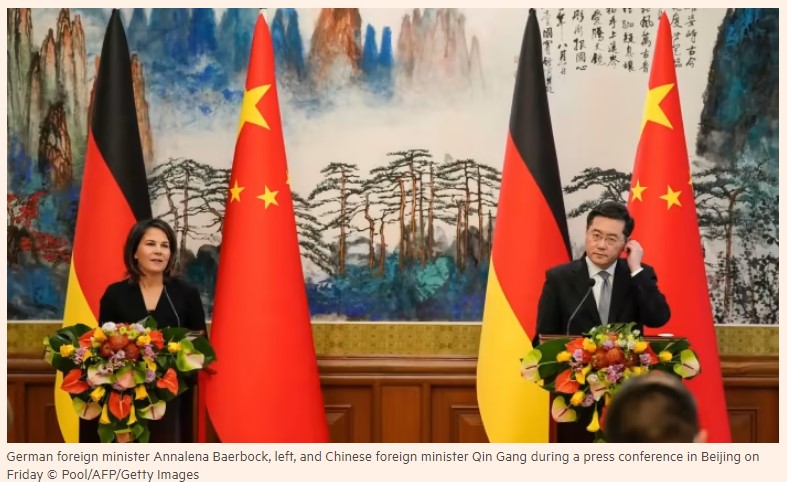
Annalena Baerbock said after a meeting in Beijing with China’s foreign minister Qin Gang on Friday that conflicts must be solved peacefully and that Berlin was monitoring the situation in Taiwan with concern. “A unilateral, violent change of the status quo would be unacceptable for us Europeans,” she said, according to Reuters.
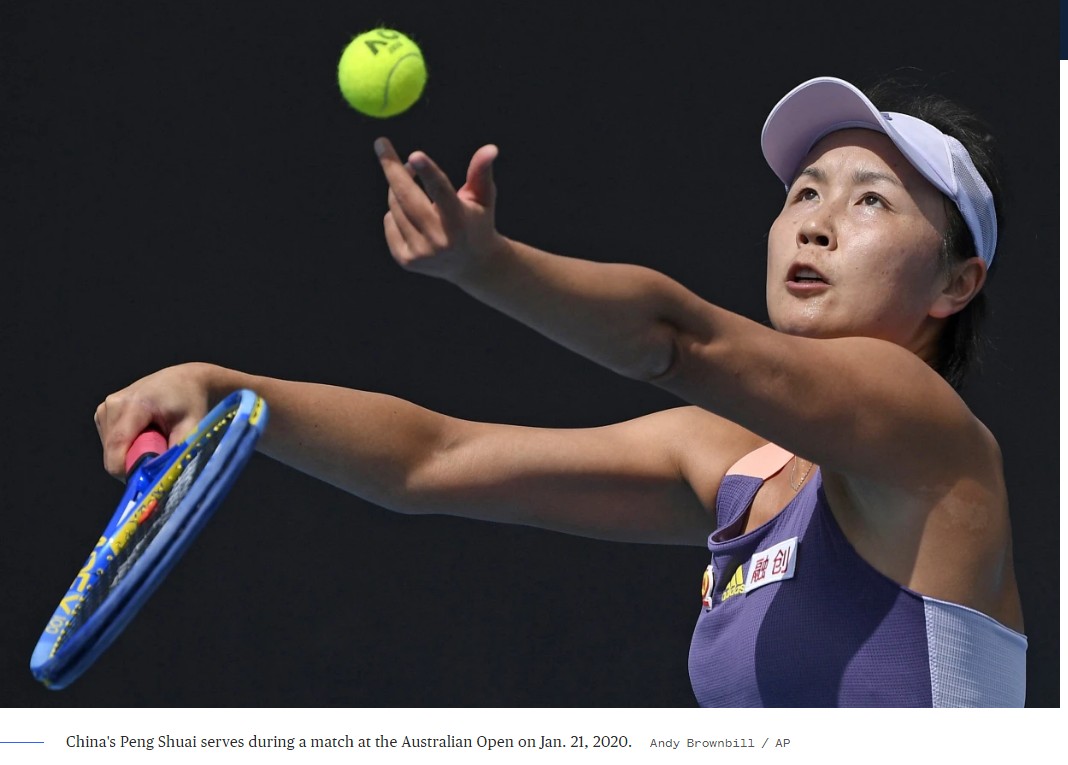
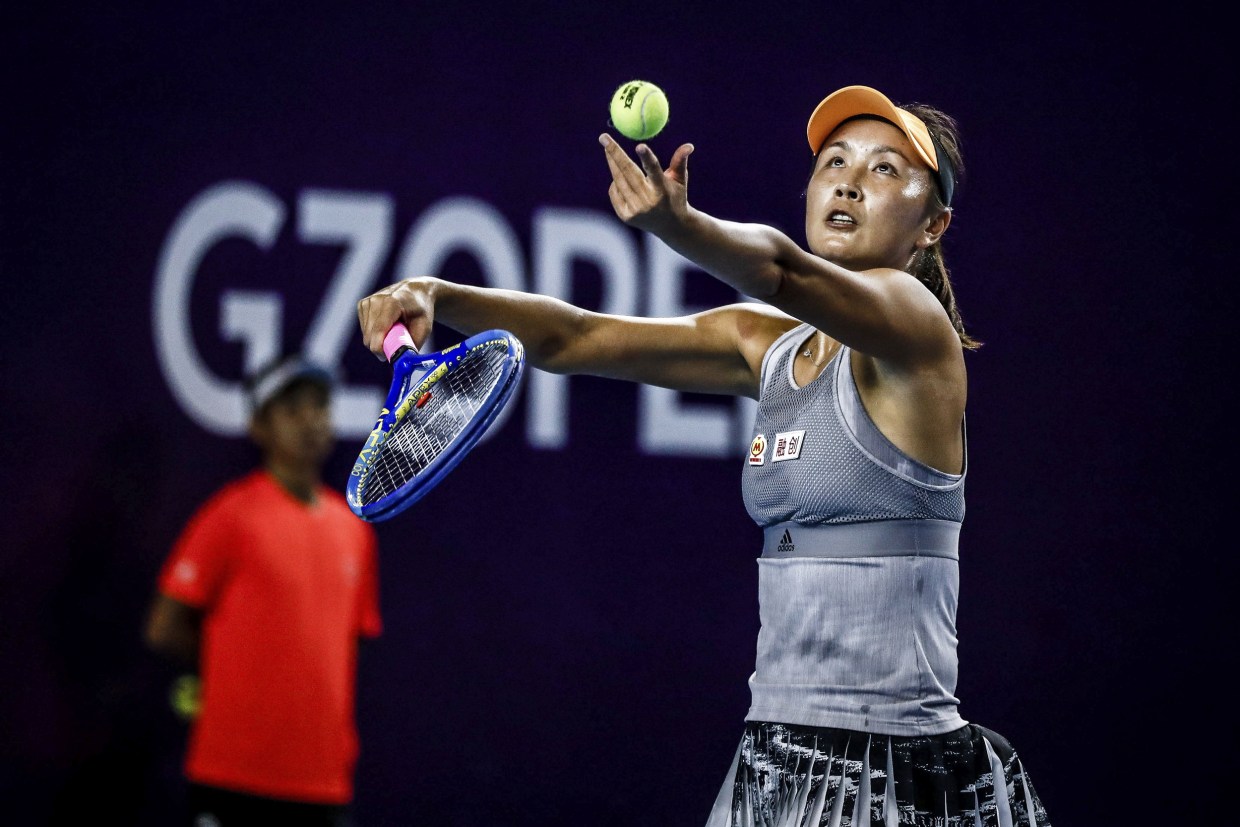
Women’s tennis tour ends Peng Shuai-inspired China boycott Peng dropped out of public view after saying in a social media post in November 2021 that a high-ranking government official forced her to have sex.
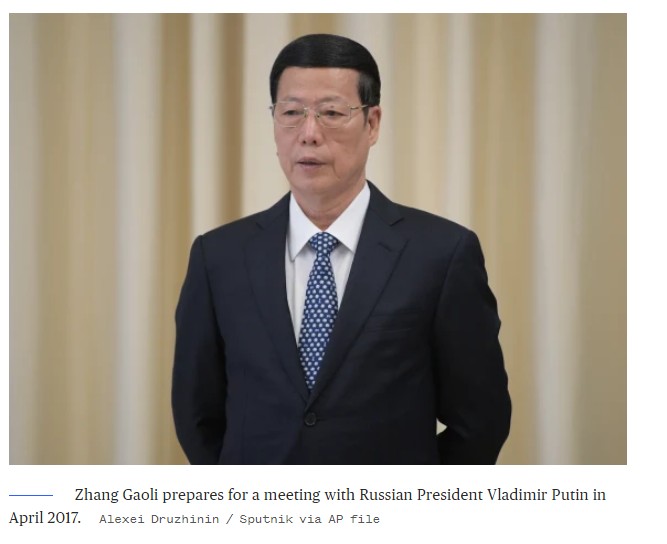
The Information Office of the State Council, China’s ruling administrative body, has not responded to requests for comment on the allegations. Zhang is one of the most senior officials in the Chinese Communist Party in recent years, and as such his contact details are not publicly available, so he could not be contacted directly.
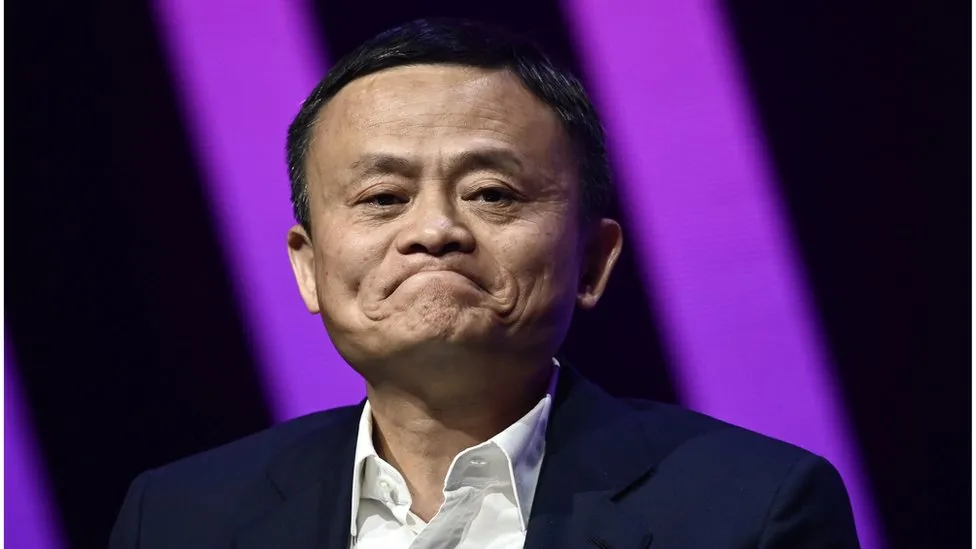
Disappearing Billionaires: Jack Ma And Other Chinese Moguls Who Have Mysteriously Dropped Off The Radar
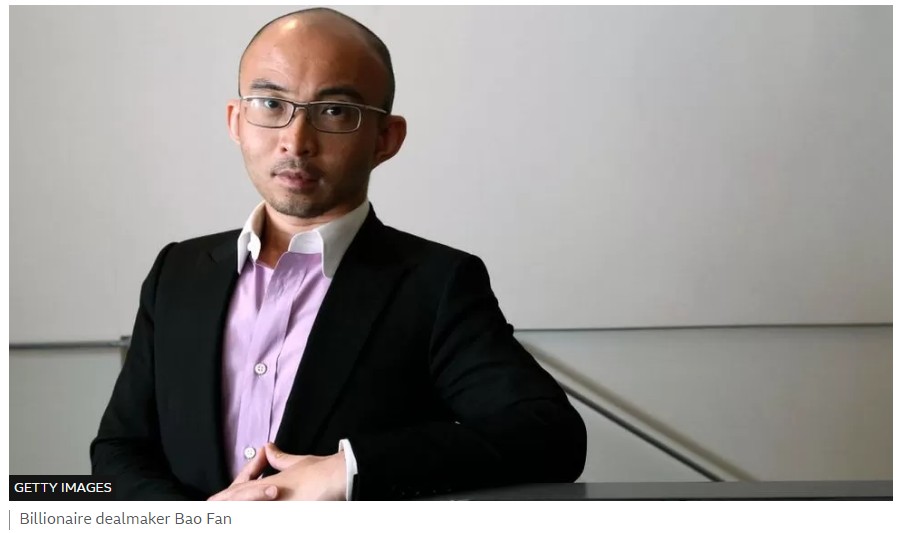
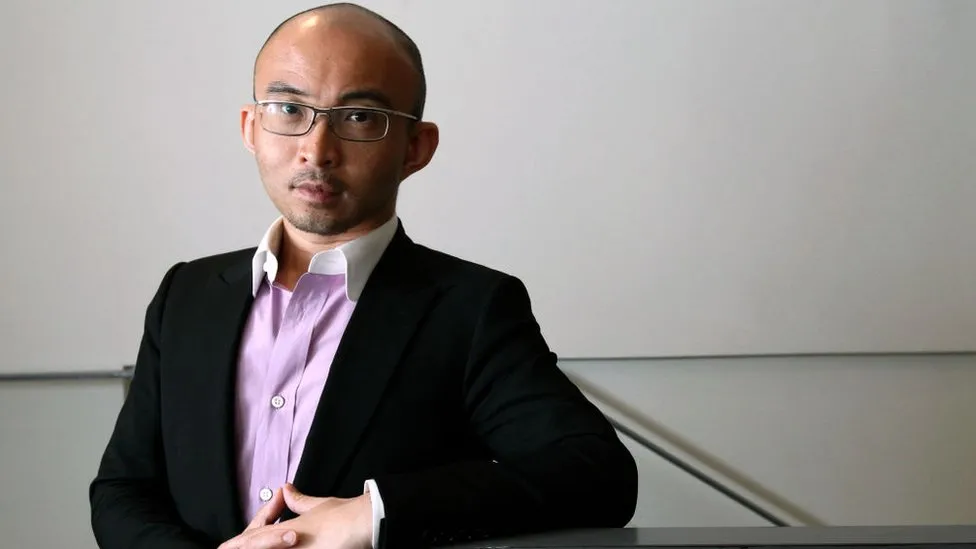
The disappearance last month of technology industry dealmaker Bao Fan has rekindled interest in a recent Chinese phenomenon – vanishing billionaires.
The founder of China Renaissance Holdings – with a client list that has included internet giants Tencent, Alibaba and Baidu – is seen as a titan in the country’s tech sector.
Mr Bao’s case has followed a well-trodden path: he went missing for days before his company announced that he was “co-operating in an investigation being carried out by certain authorities in the People’s Republic of China”.
Jack Ma, the founder of Alibaba, made headlines when he was recently spotted at Yungu School in Hangzhou, where the company is headquartered. He had rarely made a public presence since he irked the Chinese Communist Party for criticizing the country’s financial regulatory system in 2020. “He described them as having a ‘pawnshop mentality,’ and that really ruffled a lot of feathers,” said Dexter Roberts, a senior fellow at the Atlantic Council Indo-Pacific Security Initiative and author of The Myth of Chinese Capitalism. “Also, just the brash character of Jack Ma rubbed a lot of regulators and very powerful people in China the wrong way.” Jack Ma wasn’t the first billionaire who mysteriously disappeared from public view. In 2015, Guo Guangchang, who is known as China’s Warren Buffet, went missing. The company later said he was assisting authorities with an investigation. In 2017, Xiao Jianhua, a Chinese-Canadian billionaire, was abducted by Chinese security agents from Hong Kong. In 2022, he was sentenced to 13 years in prison for fraud and corruption. The mysterious disappearance of China’s billionaires hasn’t stopped yet. In February, Bao Fan, a renowned investor banker, became the latest name on the list of ‘vanishing billionaires.’ However, a few days later, his company said he was “cooperating in an investigation being carried out by certain authorities in the People’s Republic of China.” “When someone like Bao Fan disappears, someone that high profile who suddenly vanishes without explanation, that inevitably sends a chilling kind of feel through the rest of the market,” said Nick Marro, lead analyst for global trade at the Economist Intelligence Unit. “I mean, how can you feel like you can do business in a place where, you know, an important leader of the industry can suddenly disappear?”
At the time of his disappearance Jack Ma was the richest person in China – he criticised financial regulatorsFosun International chairman Guo Guangchang. (Photo by HECTOR RETAMAL/AFP via Getty Images). AFP VIA GETTY IMAGESRetired real estate executive Ren Zhiqiang. CHINA NEWS SERVICE (CNS)/AFP VIA GETTY IMAGESBillionaire dealmaker Bao Fan
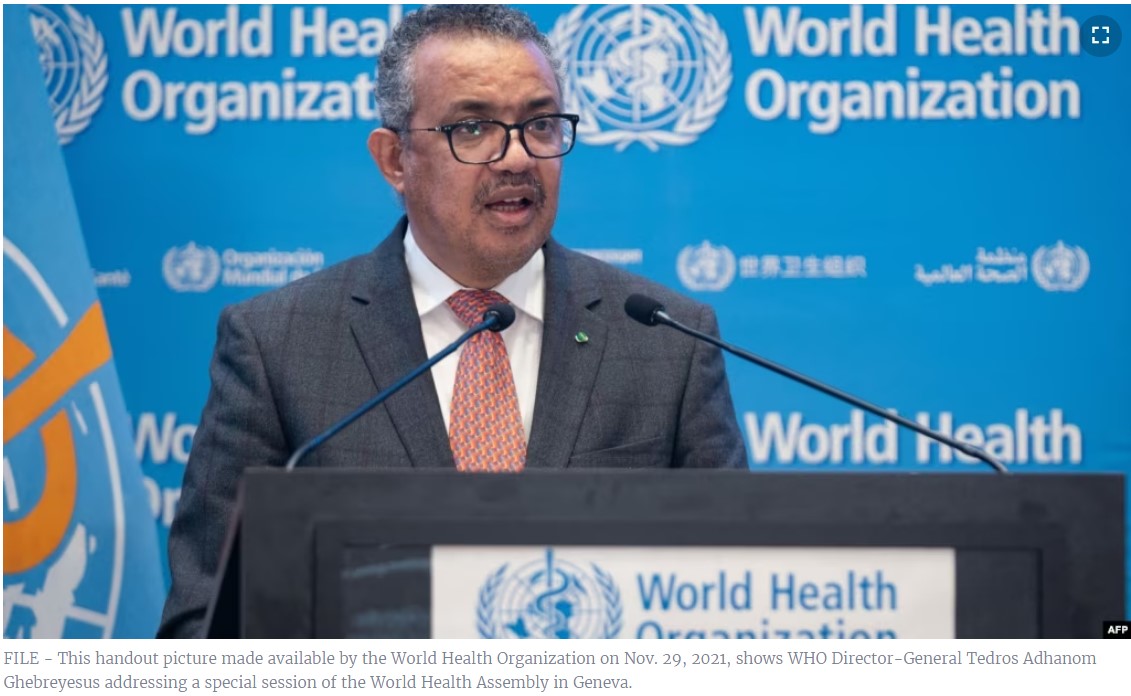
The World Health Organization said Thursday that it was sure China had far more data that could shed light on the origins of COVID-19, demanding that Beijing immediately share all relevant information.
“Without full access to the information that China has … all hypotheses are on the table,” WHO chief Tedros Adhanom Ghebreyesus said in Geneva.
“That’s why we have been asking China to be cooperative on this,” he said, insisting that if Beijing does provide the missing data, “we will know what happened or how it started.”
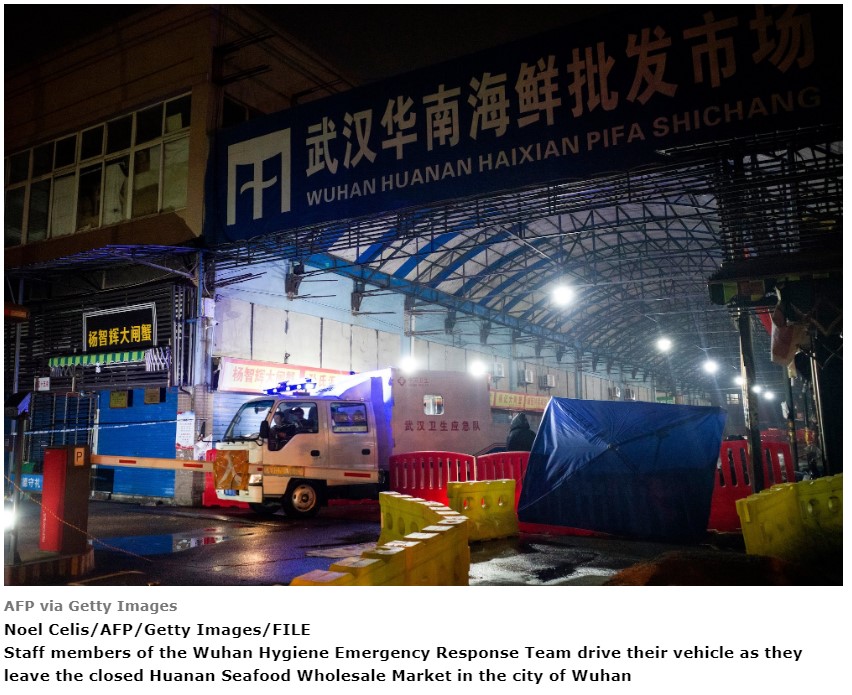
More than three years after COVID-19 surfaced, heated debate still rages around the origins of the pandemic.
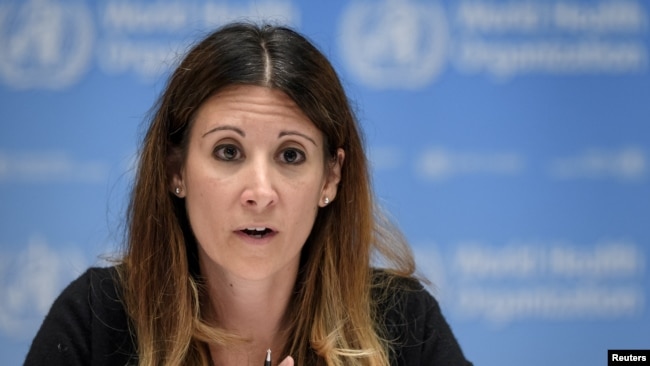
FILE – WHO epidemiologist Maria Van Kerkhove — pictured at WHO headquarters in Geneva, Switzerland, on July 3, 2020 — said on Thursday that scientists and others need to share what they know about COVID-19. “This is not a game,” she said.
This is not the first time Van Kerkhove has been vocal about China’s lack of transparency about Covid, nor is she the only world leader to call on China to be forthcoming about the beginnings of the pandemic.
In March, Van Kerkhove described to Science WHO’s late discovery of the Chinese data about the market as “beyond infuriating,” calling the lack of collaboration “scary as hell.”
Dr. Michael Osterholm, director of the Center for Infectious Disease Research and Policy at the University of Minnesota and a member of President Joe Biden’s Covid task force during the presidential transition, said Van Kerkhove’s editorial puts WHO on the record on the issue.
“Will that be a compelling incentive for China to share more? No. They’re going to do what they’re going to do,” Osterholm said.
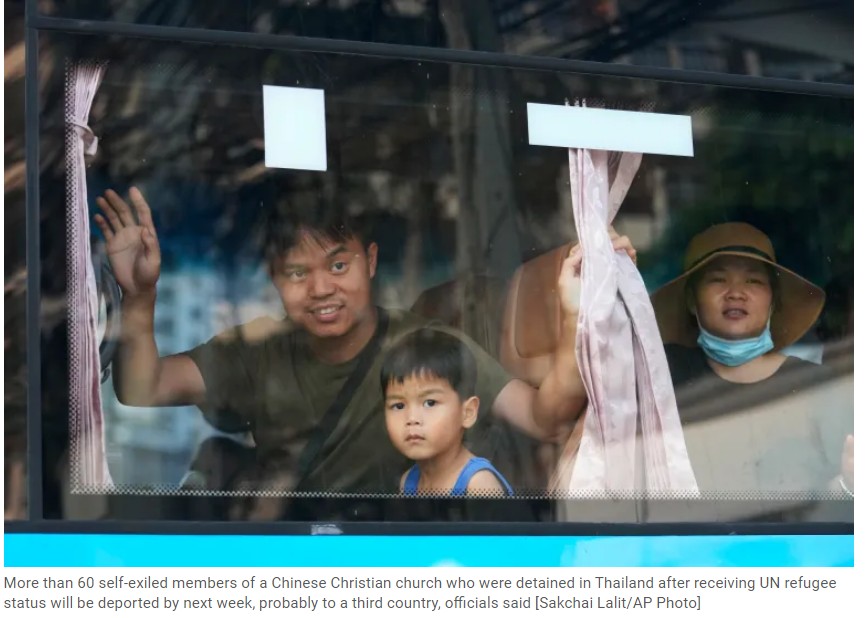
In its annual report last year, the United States Commission on International Religious Freedom said the Chinese Communist Party requires religious groups to support its rule and political objectives, including by altering their religious teachings to conform with the party’s ideology and policy. “Both registered and unregistered religious groups and individuals who run afoul of the CCP face harassment, detention, arrest, imprisonment, and other abuses,” the commission said.
Members of the Shenzhen Holy Reformed Church, also known as the Mayflower Church, leave from the Nongprue police station on their way to Pattaya Provincial Court in Pattaya, Thailand, Friday, March 31, 2023 [Sakchai Lalit/AP Photo]
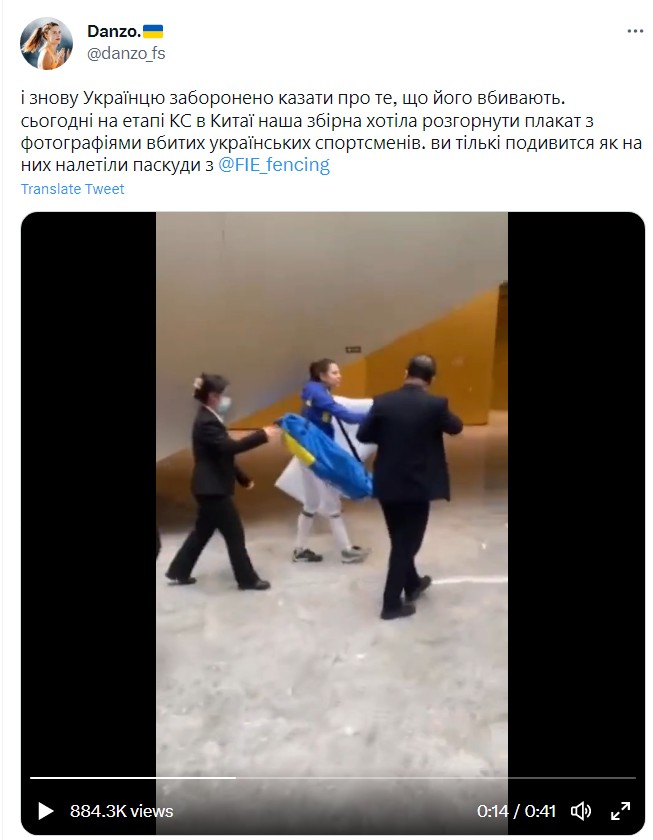
Ukrainian fencing national team tried to take pictures with banner printed with photos of Ukrainian athletes killed by the Russians at the Fencing World Cup in communist China, the communist chinese immediately swarmed up to stop them.
і знову Українцю заборонено казати про те, що його вбивають. сьогодні на етапі КС в Китаї наша збірна хотіла розгорнути плакат з фотографіями вбитих українських спортсменів. ви тількі подивится як на них налетіли паскуди з @FIE_fencingpic.twitter.com/khkeOOmqu4
China is known for its stringent censorship regime, with popular apps like Douyin falling in line. The search term ‘Tiananmen 1989’ on Douyin did not yield any search result, CNN reported. But the same term searched on TikTok will lead to videos of users talking about the People’s Liberation Army’s brutal crackdown on pro-democracy protesters in Beijing that year.
— Read on www.hindustantimes.com/technology/why-is-chinese-app-tiktok-inaccessible-in-china-101679819210659.html
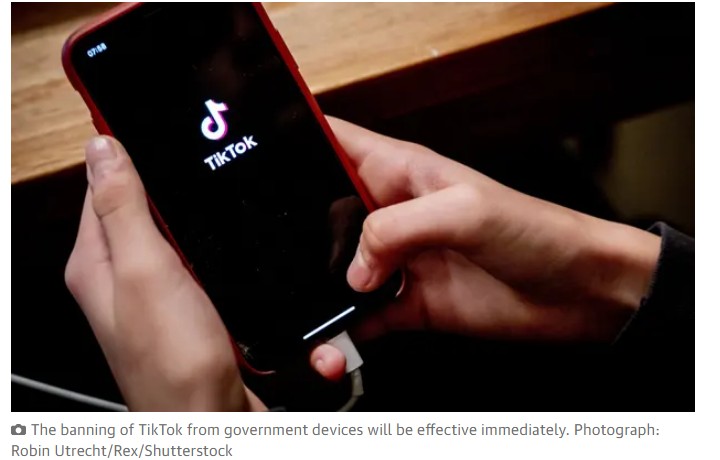
Chinese short video app TikTok is facing a tough time globally. While it has been banned by countries like United Kingdom, Canada, France, Belgium, India and others, it is fighting to prevent itself to be banned by the United States. The Senate has already voted to ban TikTok from all government devices.
China is known for its stringent censorship regime, with popular apps like Douyin falling in line. The search term ‘Tiananmen 1989’ on Douyin did not yield any search result, CNN reported. But the same term searched on TikTok will lead to videos of users talking about the People’s Liberation Army’s brutal crackdown on pro-democracy protesters in Beijing that year.
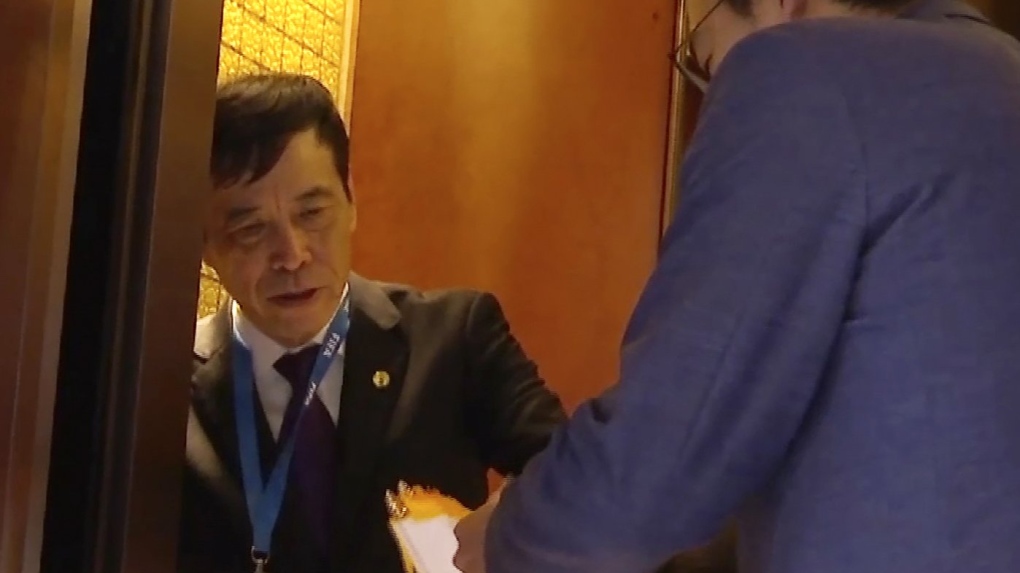
In this image made from video, Chen Xuyuan, head of the Chinese Football Association, gets on an elevator in Shanghai, Oct. 24, 2019. China’s scandal-plagued official Football Association has been rocked by new corruption probes into its chiefs of discipline and competition. (AP Photo, File)
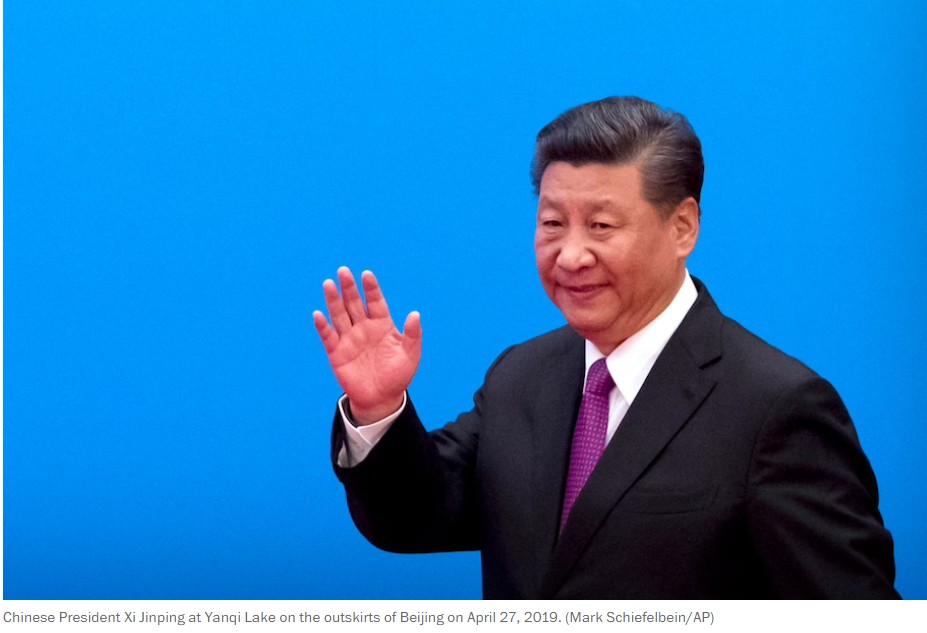
China’s increasingly autocratic president and Communist Party leader Xi Jinping declared a plan to make China a football superpower, but funding and enthusiasm have appeared to dwindle. Xi has also made fighting corruption a signature policy, taking down political rivals in the process and further embedding strict policies governing freedom of speech and civil society organizations outside party control.
Sports falls under the same yoke of state control and the national team has seen a revolving door of foreign and domestic managers cut loose for their failure to produce results.
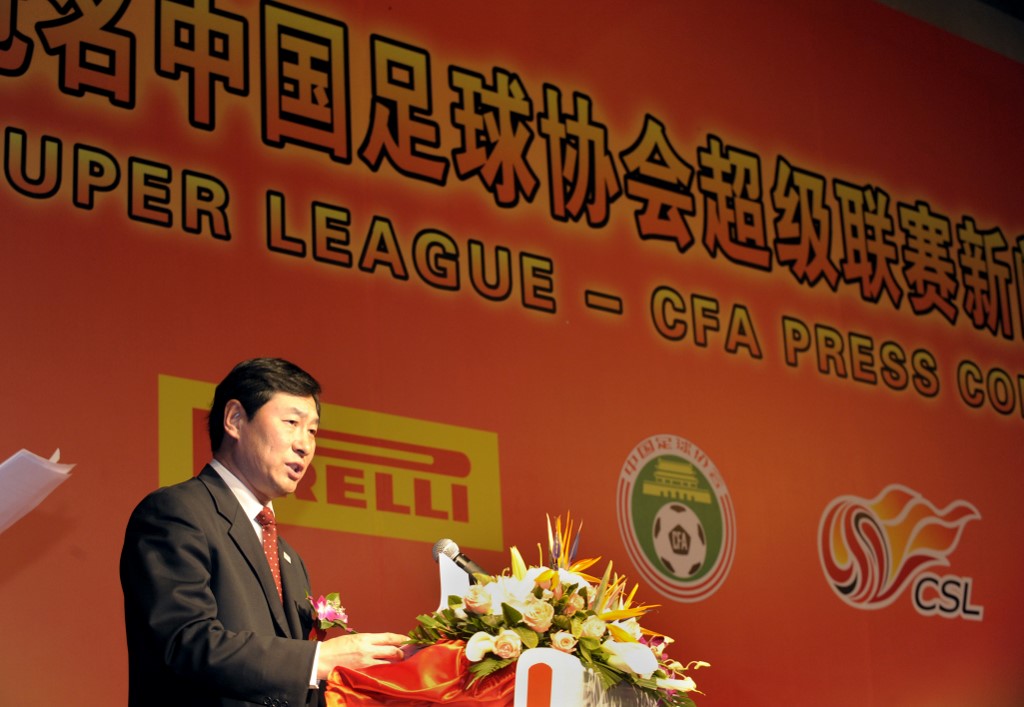
(FILES) This file photo taken on March 20, 2009 shows Nan Yong, then vice president of China Football Association, speaking during the sponsorship signing ceremony of 2009 Chinese Football Association Super League in Beijing. – Allegations of organised gambling, crooked referees and match-fixing had dogged the sport in the world’s most populous country for years. (Photo by LIU JIN / AFP)
China’s scandal-plagued football association has been rocked by new corruption probes into its chiefs of discipline and competition.
The sports ministry on Friday said Wang Xiaoping, director the CFA’s Disciplinary Committee, and Huang Song, were both “suspected of serious violations” of law and discipline — the government’s usual bywords for graft.
Huang was being investigated by the ruling Communist Party’s corruption watchdog, the sports ministry’s anti-graft body and by authorities in Hebei province outside Beijing where the national soccer team maintains a training camp, the notice said.
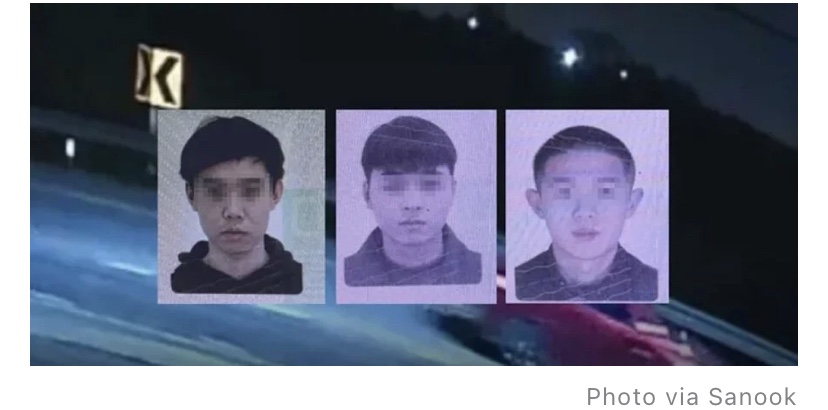
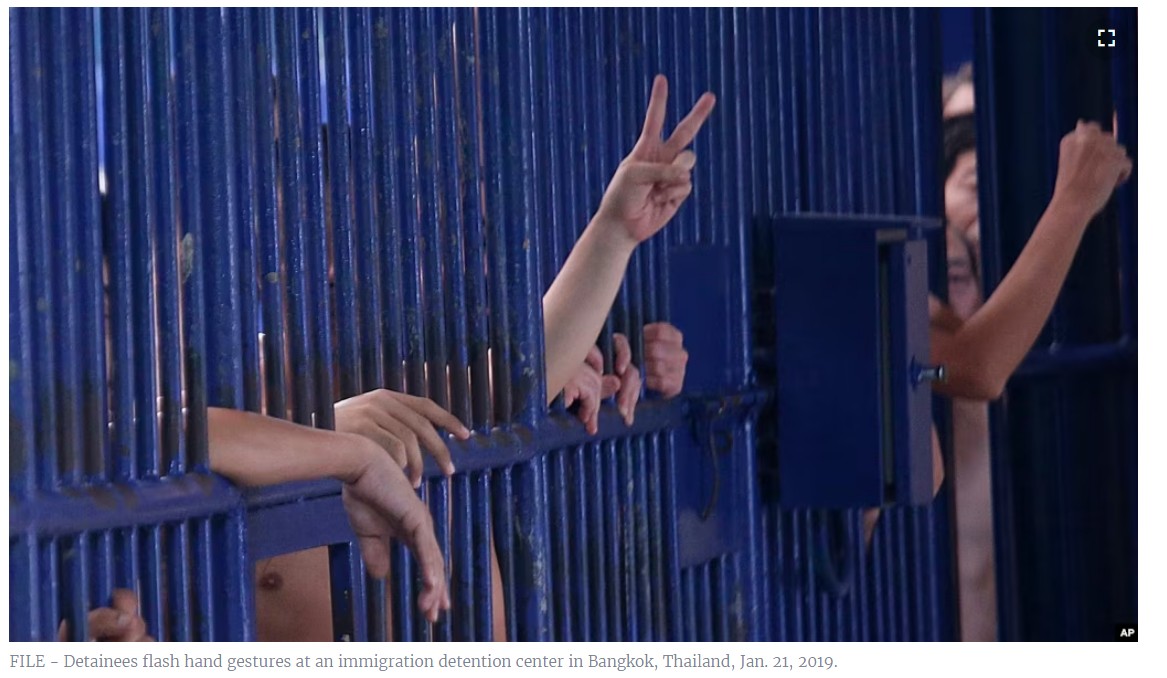
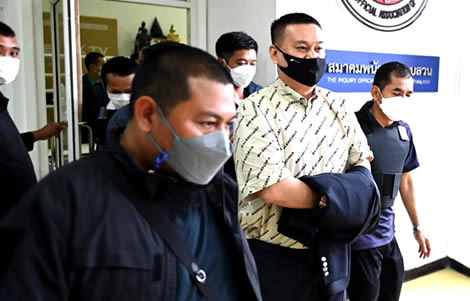
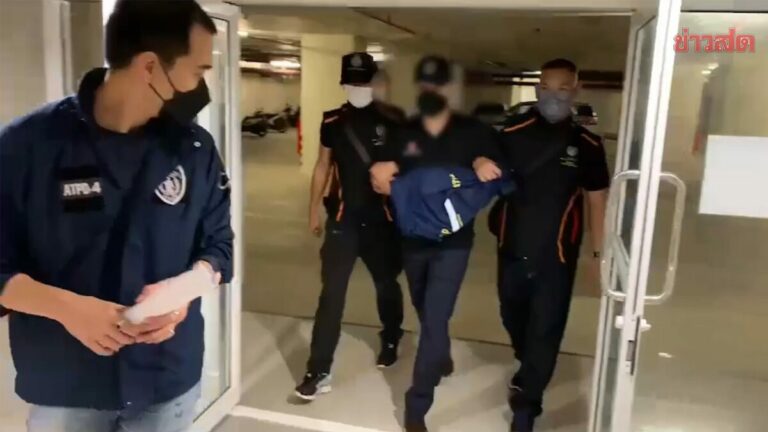
Thai Authorities allege he used high-level Thai connections to operate a criminal ring that brought at least 4,000 Chinese nationals into Thailand to run spinoff businesses, including nightclubs where drugs were openly sold to Chinese customers. He has pleaded not guilty to the charges and faces trial in the coming months.
The investigation opened a window into the world of the shadowy front companies used by Chinese nationals to establish illegal business empires in Thailand, as well as dubious visa services offered by Thai immigration police to people who then established “gray businesses” in the kingdom, according to the police.
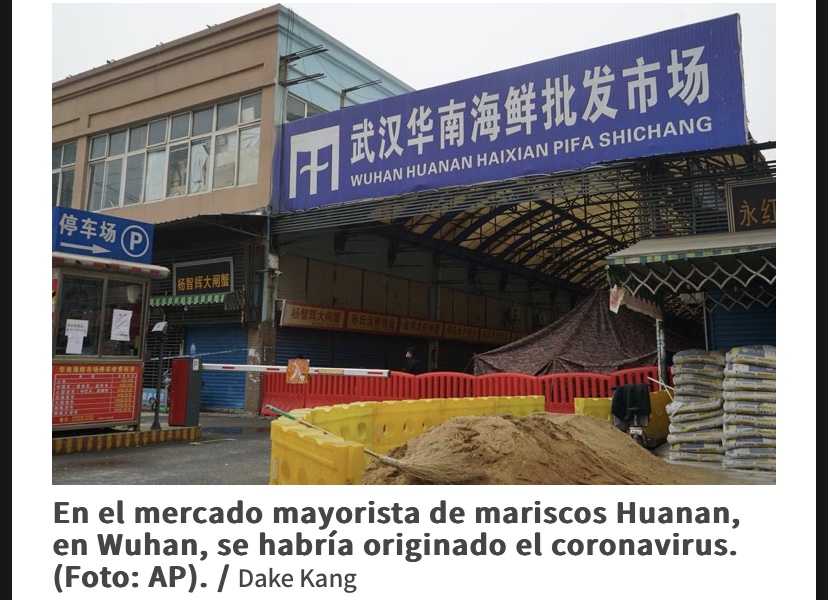
THE EARLY phase of the coronavirus outbreak in China remains an important and still poorly understood lacuna. Prompt, early action could have saved lives and averted enormous disruption. Instead, the Chinese people were exposed to danger in the first weeks of the epidemic when their officials failed to sound the alarm, even though they knew something was afoot.