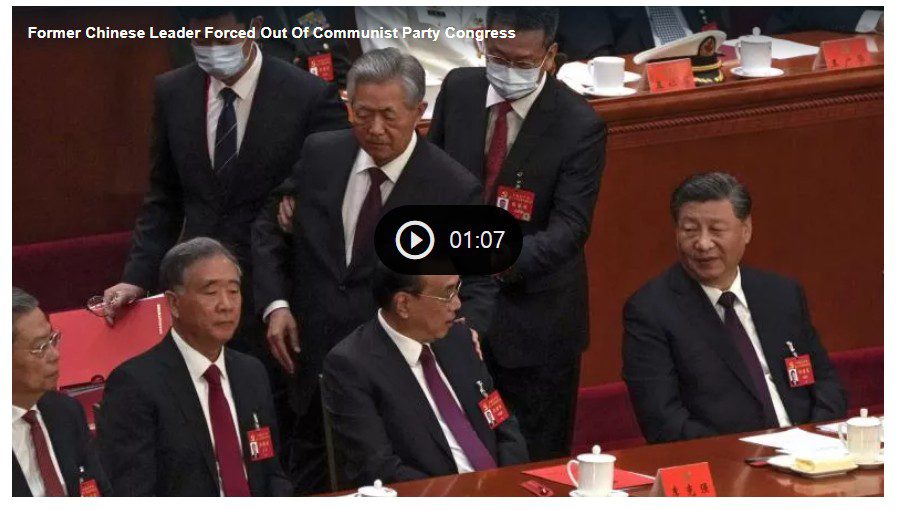
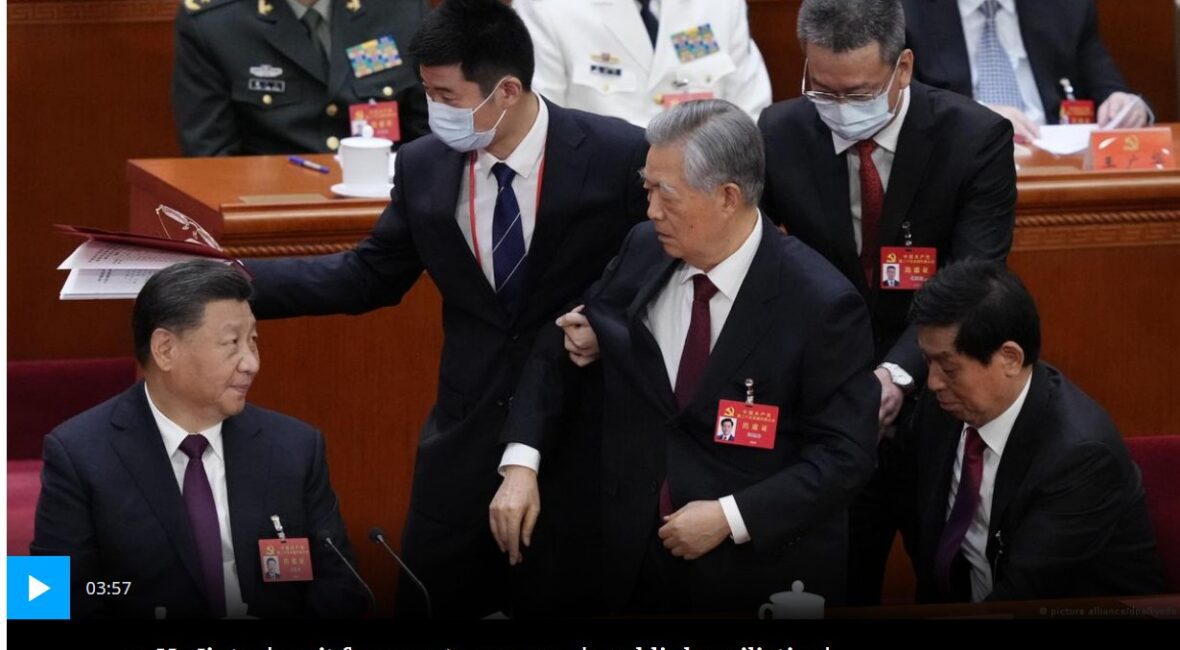
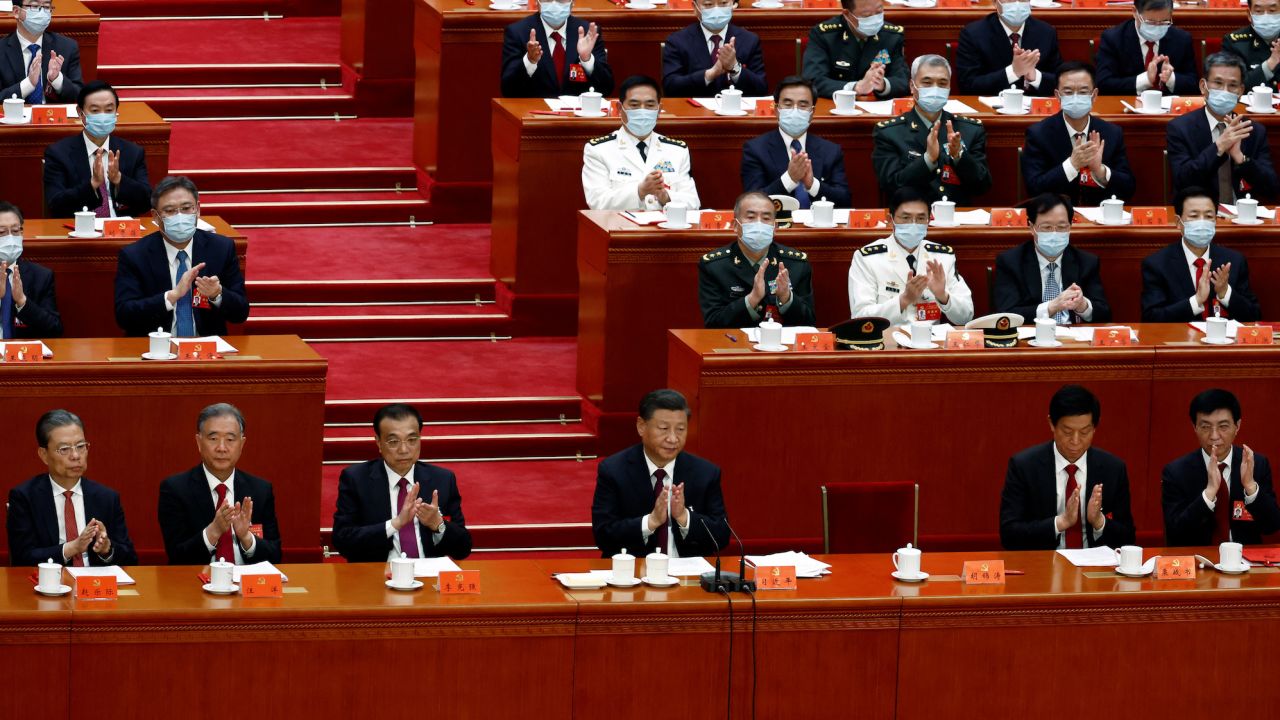
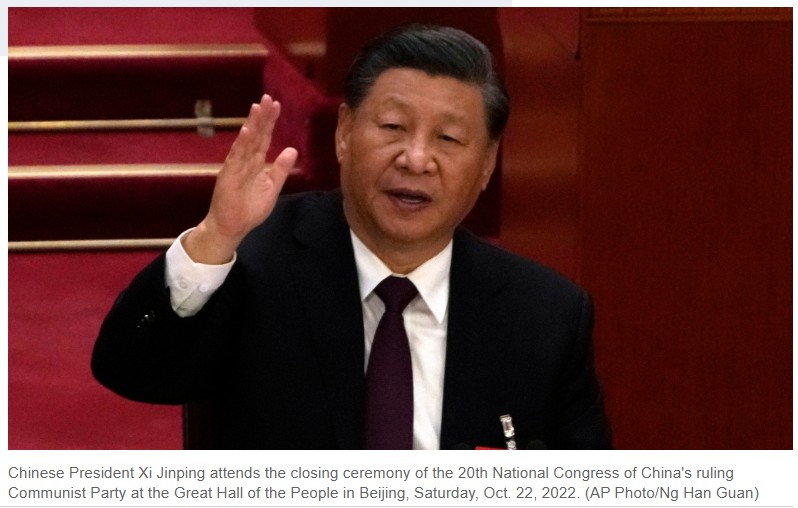
“Xinhuanet reporter Liu Jiawen has learned that Hu Jintao insisted on attending the closing session of the Party’s 20th National Congress, despite the fact that he has been taking time to recuperate recently,” the Twitter channel China Xinhau News tweeted on October 22.
It followed this up with another tweet that read: “When he was not feeling well during the session, his staff, for his health, accompanied him to a room next to the meeting venue for a rest. Now, he is much better.”
However, the video footage of the moment appears to show Hu initially resist being hoisted up by one individual before another comes in to assist.
Shanghai Xiangyang North Road Two girls pulled up a banner. There are some simple Chinese characters written. Don’t do that. Don’t do that. Don’t do that. People around us say we’ve always wanted to do this.
No coverage of Congress drama, social media censored
Saturday’s evening news in China featured images of Hu attending the session but none of him being removed.
On China’s Twitter-like Weibo, a few social media users discussed the incident but by the evening, the comments section of almost all Weibo posts containing Hu’s name were no longer visible, according to a Reuters review.
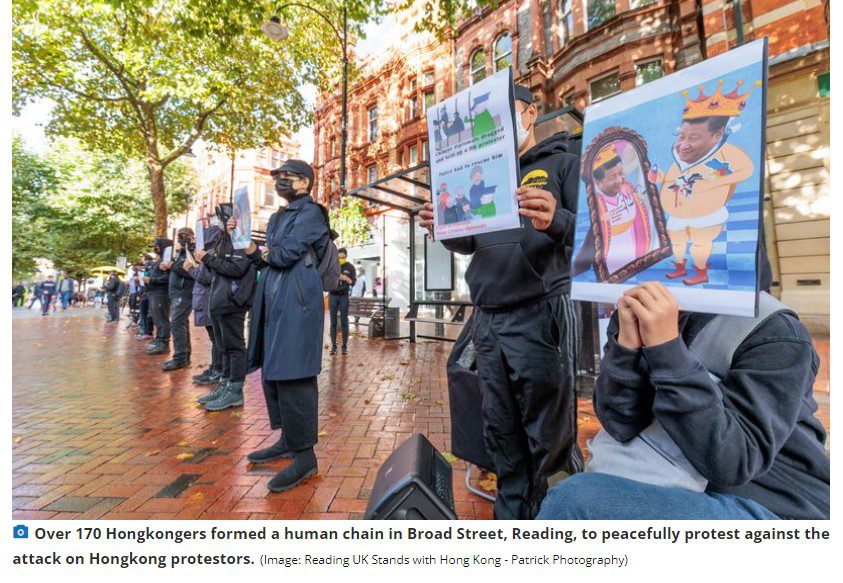
Around 170 protesters formed a human chain in Reading town centre on Sunday, October 23. Reading Hong Kongers from the group Reading UK Stands with Hong Kong took to Broad Street to protest against the Chinese Communist Party (CCP).
Many Hongkongers fled their country in 2021 and arrived in the UK – which ruled the colony until it was handed back to the People’s Republic of China in 1997. Recently, protestors were allegedly assaulted outside the Chinese Consulate in Manchester and this led to Hongkongers in Reading and other parts of the country banding together to demonstrate against this.
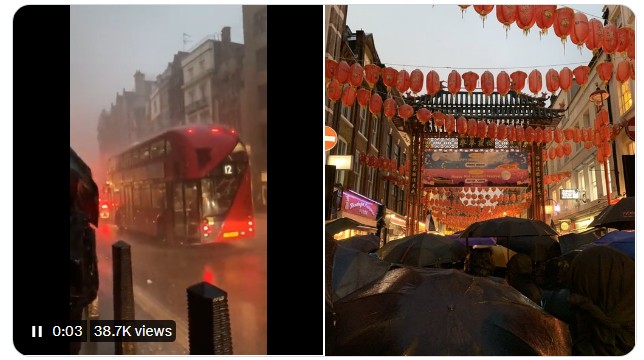
Today over 1000 #Hongkongers in London marched from Downing St to Chinese Embassy to protest against the peaceful protester #BobChan being beaten up by the Chinese diplomat at the China consulate in Manchester last week. We have shown great determination, marching in rainstorm👇🏻 pic.twitter.com/PY9fvzYTqu
Today over 1000 #Hongkongers in London marched from Downing St to Chinese Embassy to protest against the peaceful protester #BobChan being beaten up by the Chinese diplomat at the China consulate in Manchester last week.
We have shown great determination, marching in rainstorm👇🏻
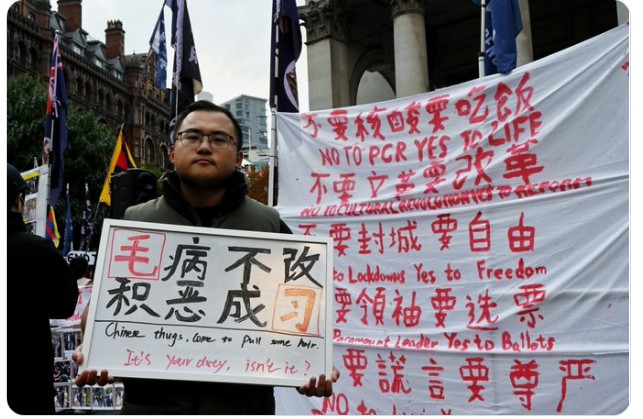
Melo, from Mainland China who 'woke up' after studying in Nottingham earlier in his life, joined the Hongkongers'protest ytd in M'cr. He held a sign against #EmperorXi and declined to admit being brave to voice out w/o face covering coz' going back to China is 'not his concern'. pic.twitter.com/TZ9NM2CMoA
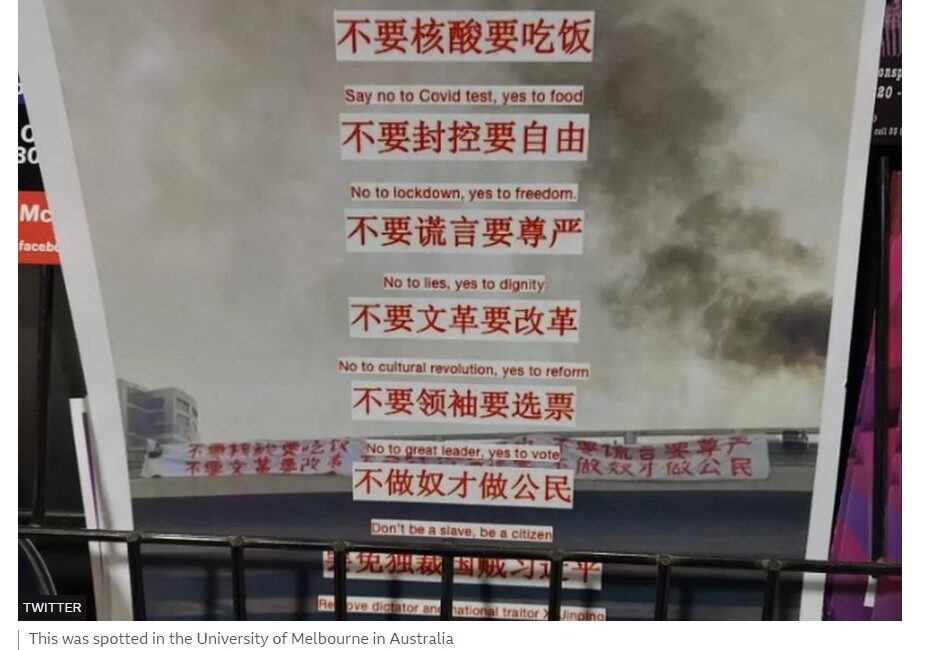
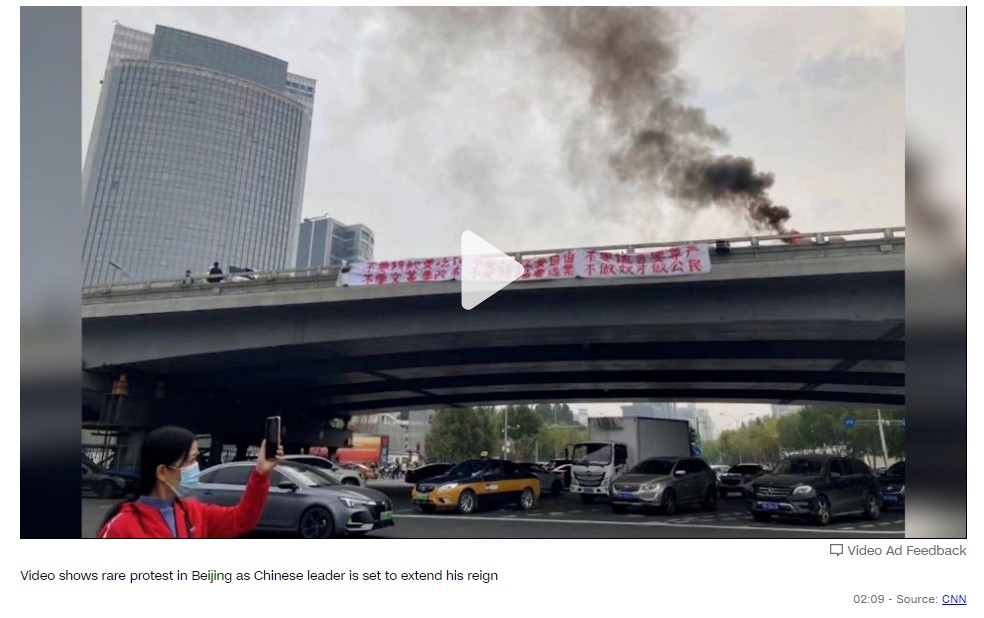
Last Thursday, a man strung banners across a bridge in China’s capital that accused Mr Xi of being a dictator.
He was quickly detained but photos of his action spread around the world.
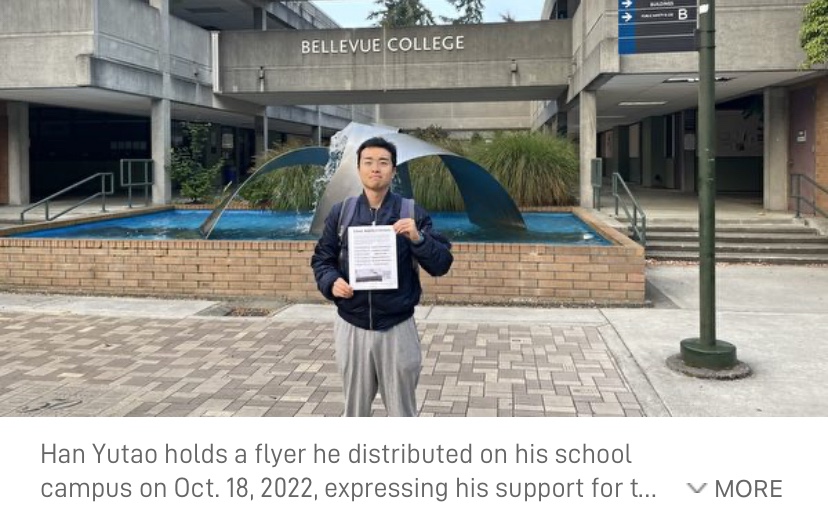
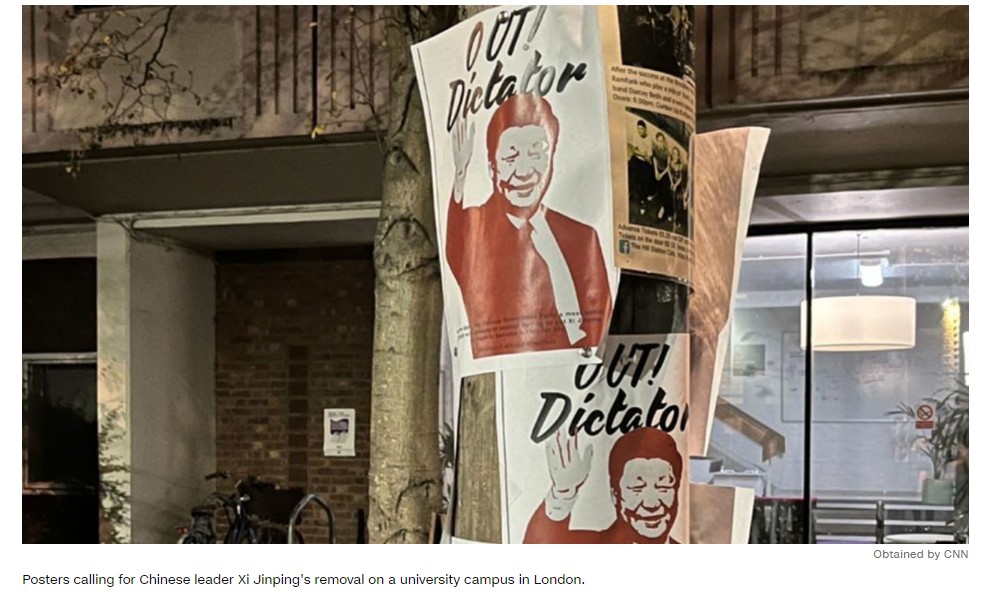
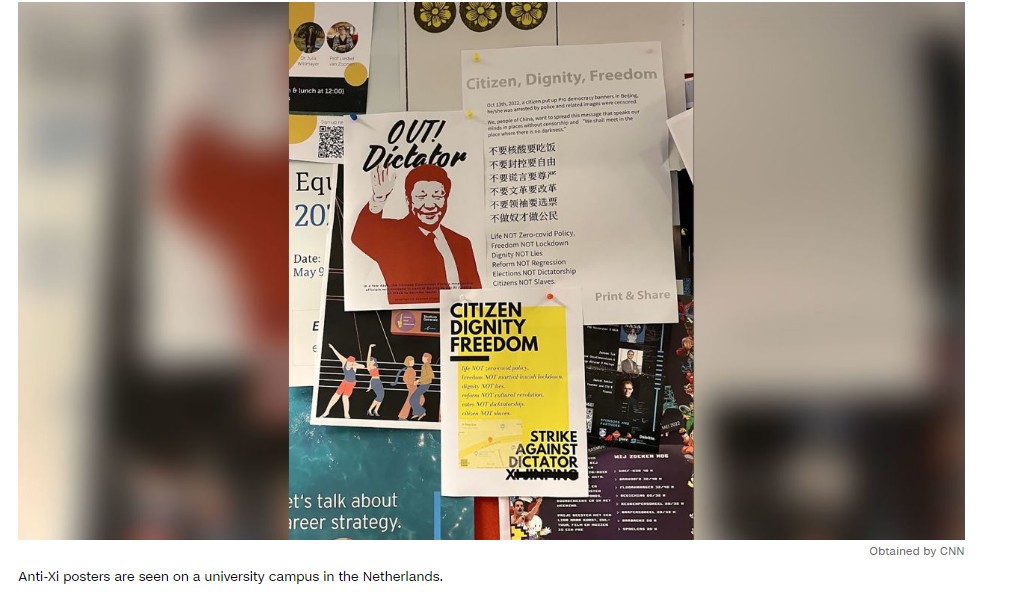
Since then similar signs and messages have appeared on several university campuses in the US, UK, Europe, Australia and elsewhere.
One handwritten sign at Colby College in the US state of Maine praised the Beijing man’s action and said: “We, people of China, want to spread this message that speaks our mind in places without censorship.”
Many replicate the messages displayed last week on the Sitong bridge in Beijing’s Haidian district.
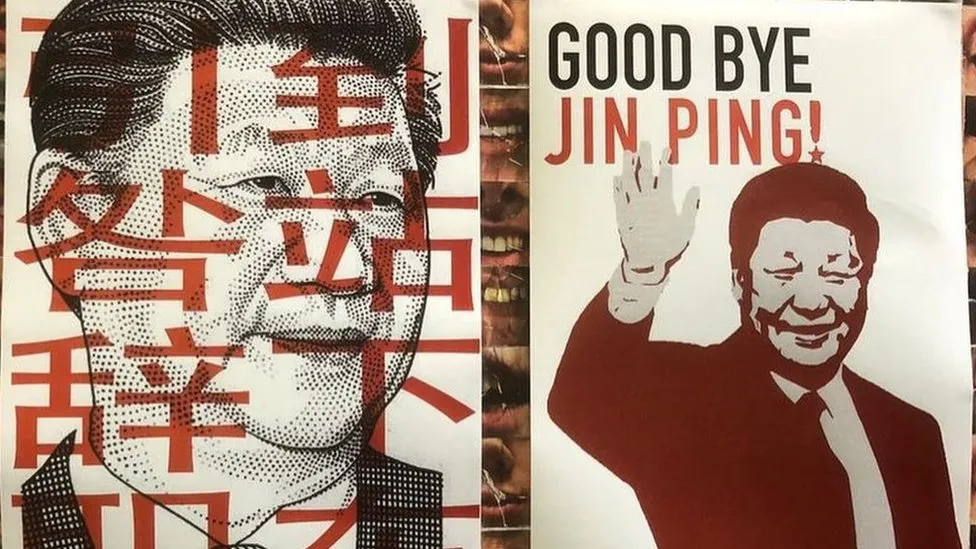
Overseas, many anti-Xi posters were put up by Chinese students like Jolie, who have long learned to keep their critical political views to themselves due to a culture of fear. Under Xi, the party has ramped up surveillance and control of the Chinese diaspora, intimidating and harassing those who dare to speak out and threatening their families back home.
As the Financial Times(Opens in a new window) reports, all American employees working in core tech positions at YMTC are being forced to leave the company. A person briefed with what’s happening inside the company said, “Asking staff to resign is necessary for the company and the right move for employees’ personal risk as well.”
State and party groups across China, meanwhile, promoted the Congress energetically in their online postings, highlighting praise for Xi and the outcome of the party’s deliberations.
Hashtags for state media congress coverage dominated the top of Weibo’s viral topics list.